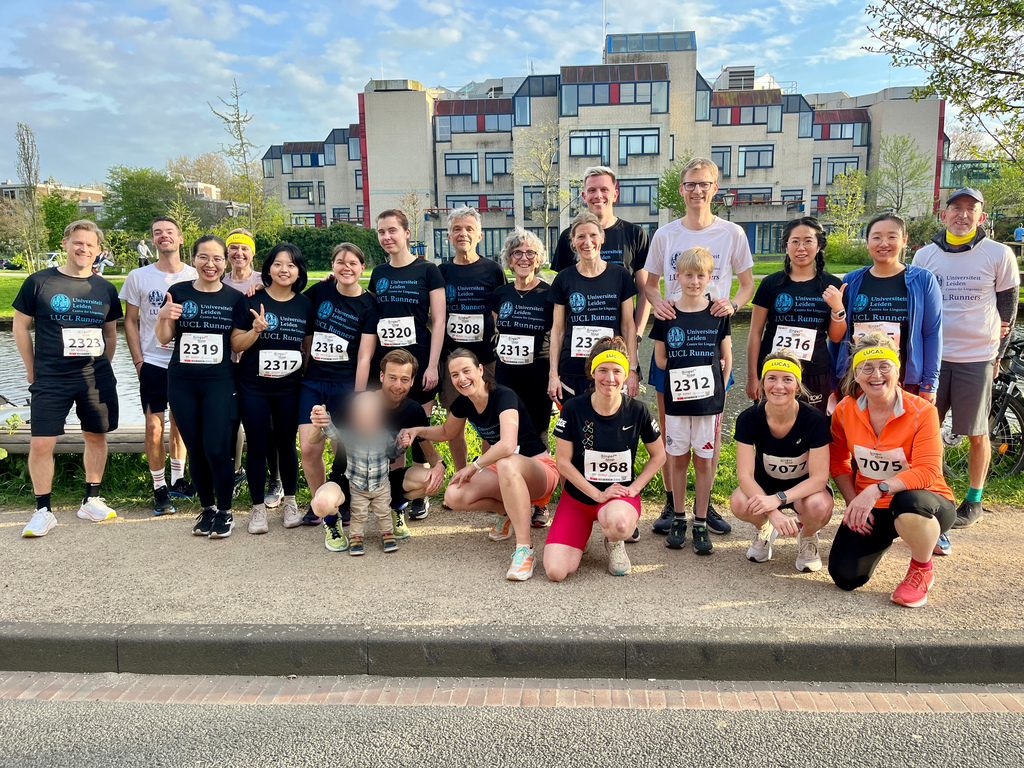
Last Friday, 17 April 2026, a group of linguists from LUCL — the ‘LUCL Runners’ — ran the Leiden Singelloop. All running linguists completed the +/- 6.5km course along the ‘singels van Leiden’. My wife also joined and I ran with our son in his stroller. As the course is way to narrow for the massive amount of people participating, the first part was a bit of a struggle, dodging people and trying to keep running, but after that, it went fine and it was great again to see all those happy faces in the equally massive crowds when they saw our small son waving to them.
Afterwards, we enjoyed each other’s company during the annual post-run party at Olga van Marion and Ton van der Wouden’s house along the route. Thanks to LUCL for sponsoring and all colleagues who supported us during the run!
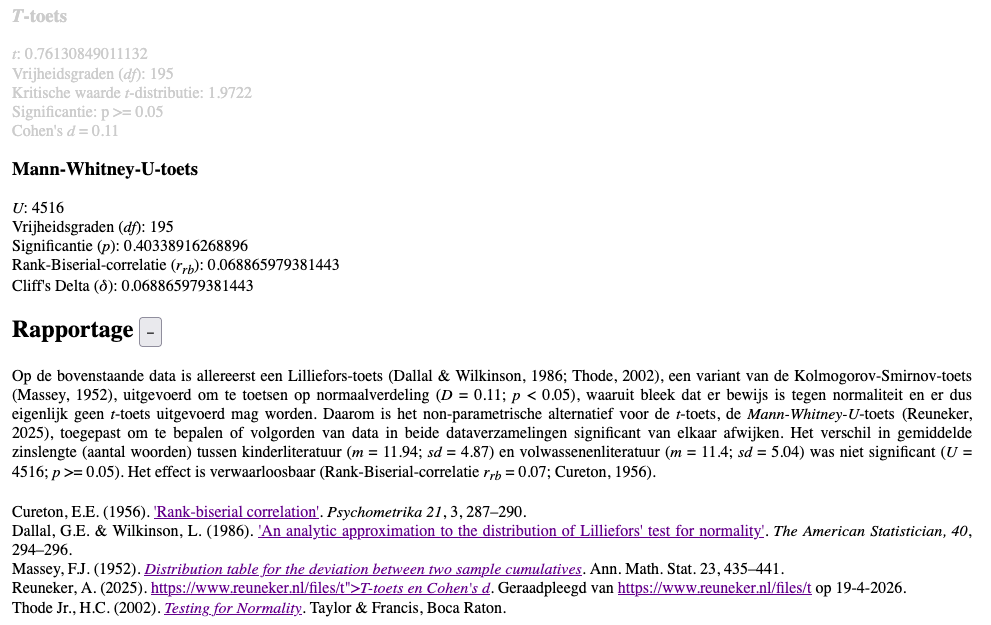
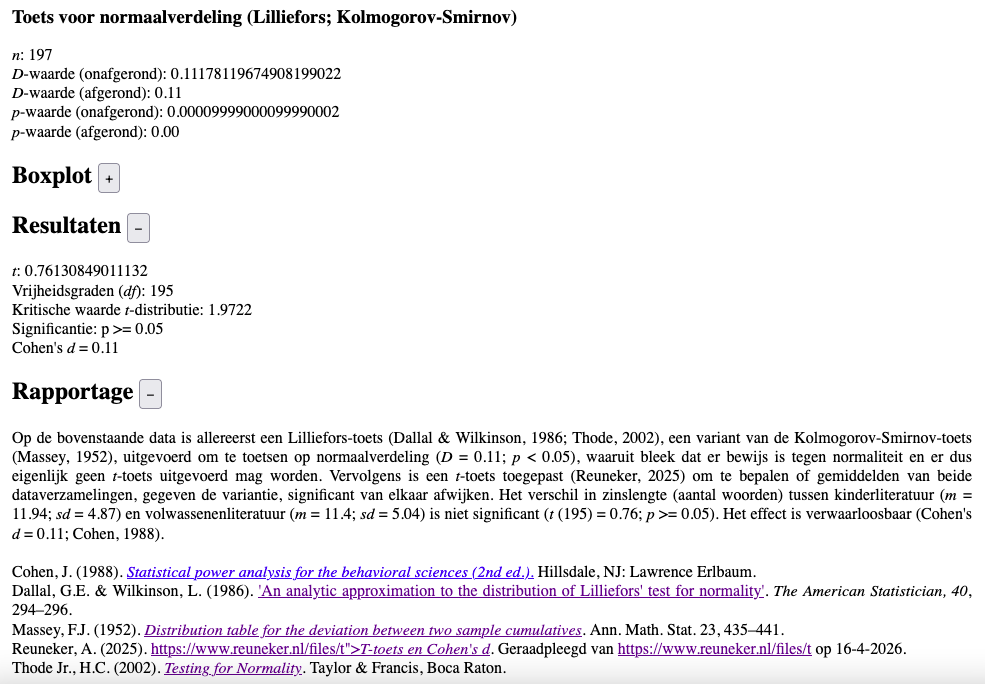
Omdat mijn eerstejaarscollege over onder andere de t-toets er weer aankomt, heb ik de code van de T-toets-en-Cohen’s-*d*-calculator nog eens goed bekeken en er wat verbeteringen in aangebracht. Een grote wijziging is de toevoeging van een toets voor normaalverdeling van de data. Ik wilde daarvoor, zoals gebruikelijk is, de Shapiro-Wilk-toets implementeren, maar dat blijkt in PHP nogal lastig te zijn, omdat de berekening afhankelijk is van allerlei matrices en statistieken die niet in PHP ingebed zijn. Daarom heb ik de Lilliefors-toets toegevoegd, die, qua uitkomst althans, ongeveer hetzelfde doet.
De Lilliefors-toets is een variant van de Kolmogorov-Smirnov-toets die wordt gebruikt om te toetsen of data afkomstig zijn uit een normaalverdeling wanneer het gemiddelde en de standaarddeviatie uit de data zelf worden geschat. Het is belangrijk zo’n toets te doen voordat je een *t*-toets op je data loslaat, omdat die toets uitgaat van normaal verdeelde data. Als die aanname niet klopt, kunnen de resultaten van de *t*-toets onbetrouwbaar zijn.
A few days ago, I received an email from triathlon coach Karen Parnell of Chili Tri, who suggested a new feature for the running and swimming metronome tool. She explained that swimmers flick through various metronomes (with varying beats per minute), without being able to look at a display. The feature Karen suggested was to include an option which would add a short audio description at the start of the metronome MP3 stating the beats per minute (BPM).
Chili Tri coaching
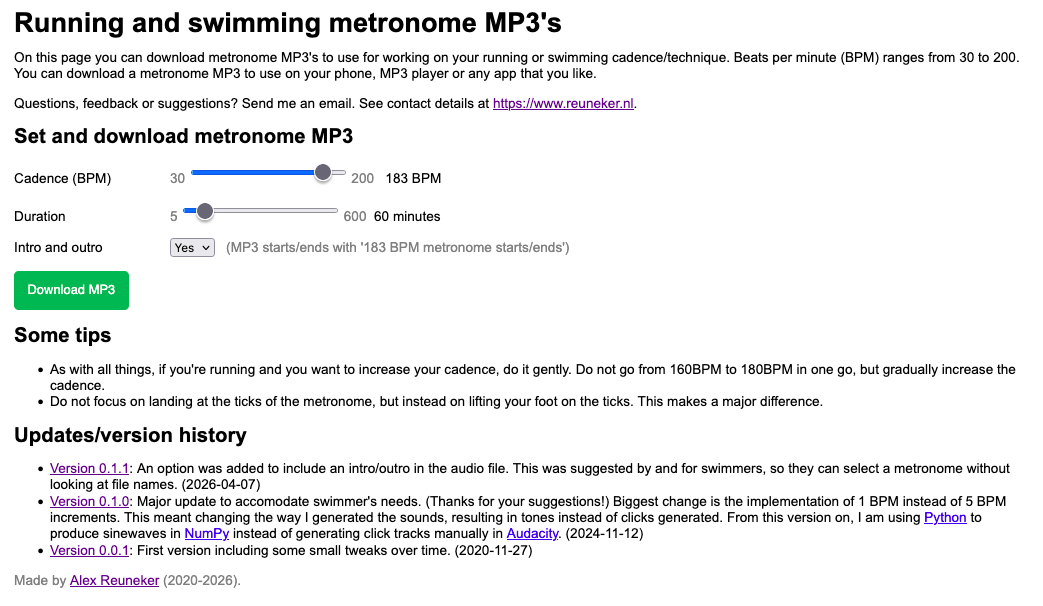
As I find programming such features nice small side challenges, I got to it pretty soon after receiving the email and I used the opportunity to clean up some code at the same time. So, now the running and swimming metronome tool has an option to add an intro and outro to the MP3 file stating the BPM of the metronome. Simple as that. Swimmers can now select a metronome without needing a display in the water to look at file names.
The new intro/outro option in the running and swimming metronome tool
I have asked Karen whether she would be willing to write a small text describing what she uses the metronome tool and the resulting MP3 files for. She was kind enough to do so, so here we go.
I’ve found that using an audio metronome can be incredibly effective for swimmers, as it provides real-time rhythmic cues to help maintain a consistent stroke rate and improve pacing efficiency in the water. Creating audio files with your target stroke rate gives you something simple to follow during your swim and helps keep your rhythm on track. This can be especially useful during longer open water sessions — listening for a minute or so to reset your rhythm, then turning it off to swim naturally. I personally use the Reuneker metronome web tool to create simple audio files for both my runners and swimmers.
Check out the new option at https://www.reuneker.nl/files/metronome and generate some MP3’s to see whether it is useful to you too. Happy swimming, running and cycling!
Al met al vond ik de voorbereiding op De Zestig van Texel, en dat is toch het grootste deel van de tijd die je besteedt aan zo’n doel, minder leuk dan ik had gedacht. Toegegeven, niet elke duurloop hoeft ‘leuk’ te zijn of helemaal goed te voelen, maar er moet wel een zekere balans zijn tussen leuk en (relatief) lijden. Deze keer waren
er eigenlijk te veel trainingen waarna ik dacht ‘Pff, die zit erop, nu al geen zin in de volgende’. Ik doe dit uiteindelijk toch voor de lol en dat plezier ‘moet’ je dan tijdens of op zijn minst achteraf toch wel ervaren. Het gaat terugkijkend overigens vooral om de lange duurlopen en sommige daarvan waren gek, maar echt leuk, zoals de loopbandmarathon en een marathon in 400’tjes rond mijn huis, maar andere ronduit verschrikkelijk, zoals de 46 kilometer op de baan in megaslecht weer. Dat was, zonder twijfel, de naarste en zwaarste training die ik ooit heb ‘afgewerkt’, want zo voelde het. Dat ik net ziek was geweest zal overigens niet hebben geholpen.
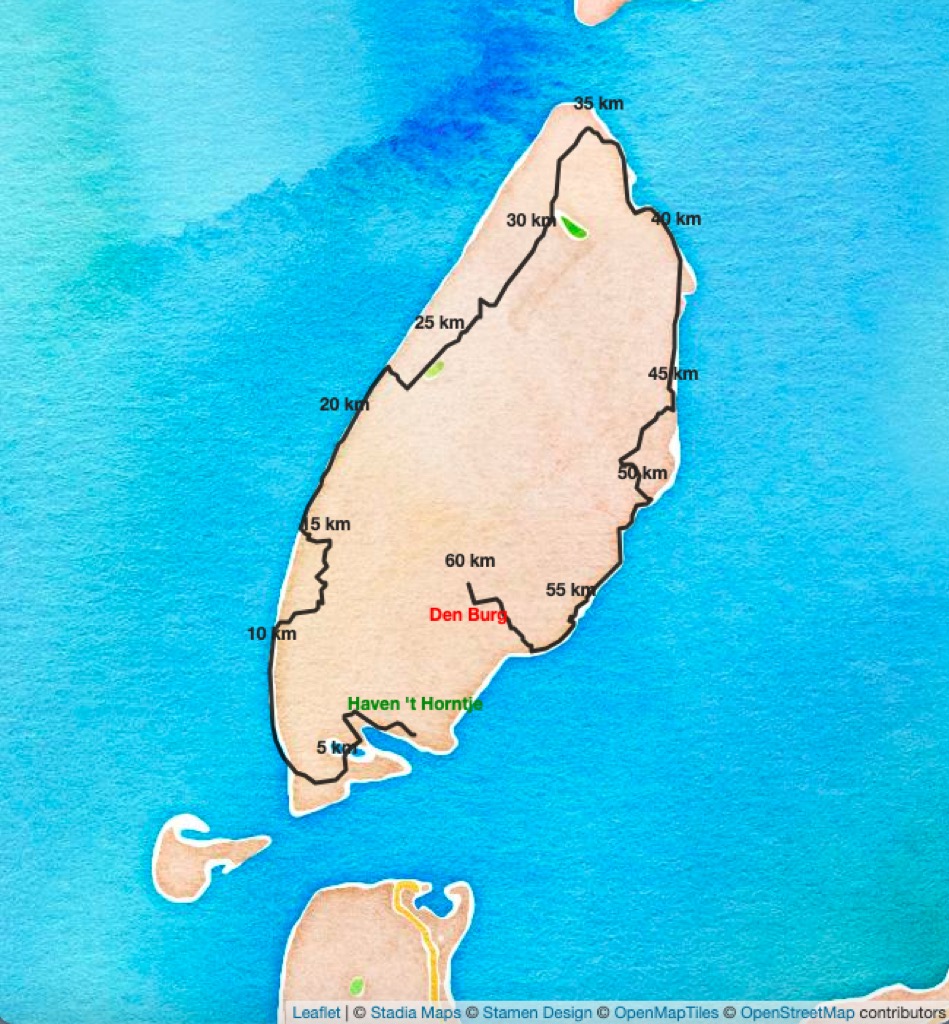
Het hele eiland rond
Ik kijk op De Zestig van Texel niet, maar op de weg ernaartoe wel dus met gemengde gevoelens terug. Zou ik het nog eens doen? Geen idee, want ik maak bewust nog even geen nieuwe plannen. Niet dat die niet direct de dag na de wedstrijd door mijn hoofd spookten, hoor, maar ik laat die gedachten even voor wat ze zijn.
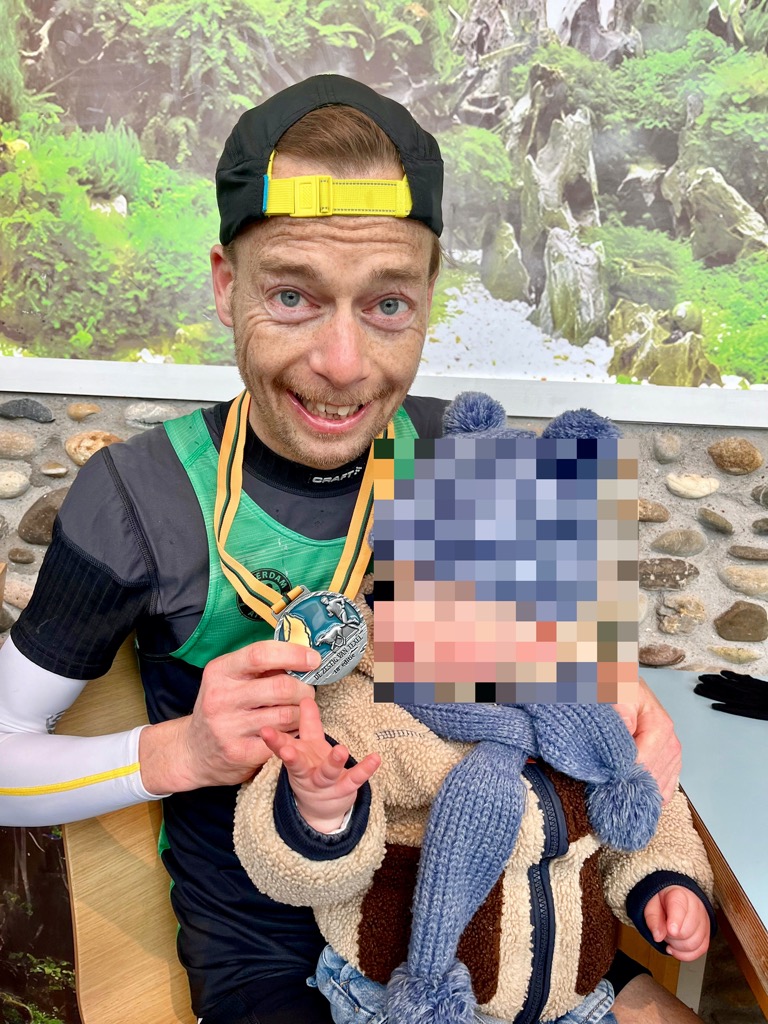
De Zestig volbracht
Nu eerst rust, hopelijk wat meer wielrennen in mooi voorjaarsweer en dan maar eens verder zien.
Hoewel de laatste paar kilometers de zwaarste waren, vond ik de training voorafgaand aan De Zestig van Texel eigenlijk het zwaarst. Ik heb echt genoten van de wedstrijd, de aardige mensen die ik heb ontmoet en gesproken, het publiek en van de inspanning en prestatie zelf. Het maken van een schema, puzzelen omdat er weinig trainingsschema’s voor deze ultra-afstand zijn, oude bekenden contacten die ultra- en/of Texel-ervaring hebben, daadwerkelijk beginnen met trainen — dat was eigenlijk allemaal leuk en spannend.
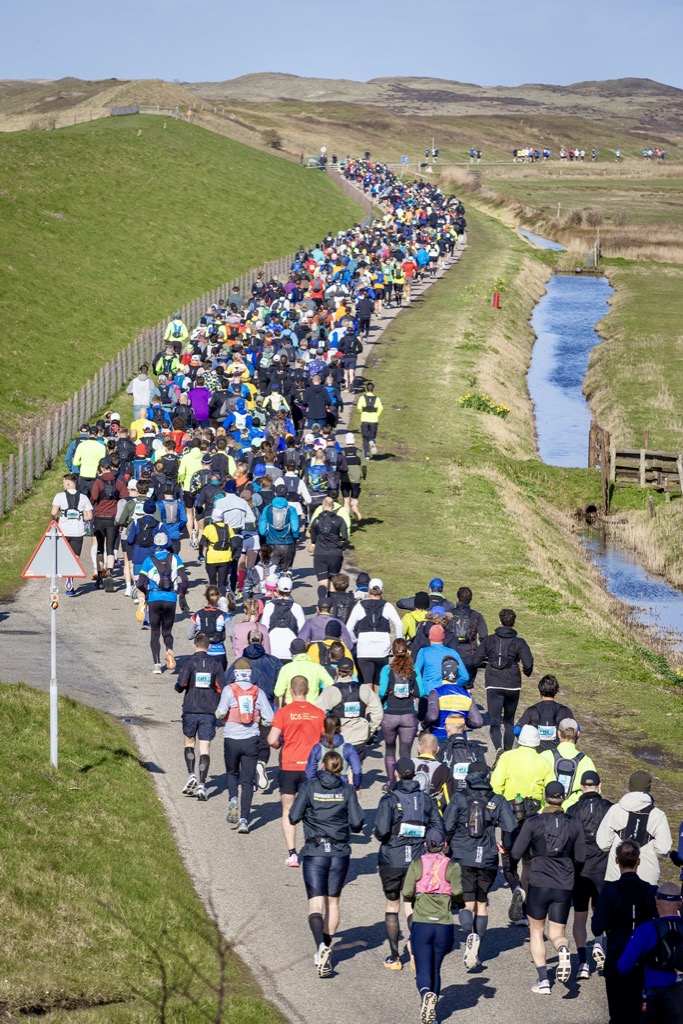
De Zestig van Texel was naast een inspannende wedstrijd ook een gezellige dag
Wat minder leuk was, maar kan gebeuren, is dat ik zowel eind december, toen de trainingen al waren begonnen, flink de griepgolf meepakte. In februari surfde ik er, helaas, nog een keer op mee — tijdens de wintersportvakantie, nota bene, die ik daardoor bijna volledig met koorts in bed doorbracht. Daarnaast had ik, door de mij niet gewone hoogtemeters en zachte ondergrond op de Sallandtrail, een (achteraf bezien kleine) peesontsteking in de linkertibialis anterior, en tegelijkertijd een kies die na een fikse wortelkanaalbehandeling getrokken moest worden en nu, weken na dato, nog steeds pijnlijk is. Voor de kies moest ik eigenlijk ontstekingsremmers slikken, maar dat zou de genezing van de peesontsteking uitstellen. Zoals al eerder geschreven – een vervelende catch 22. Maar dat zijn incidenten.
Zeker naarmate het schema vorderde, werden de duurlopen me eigenlijk te lang. Misschien heb ik er ook gewoon te veel gedaan — in principe elke week, met elke vierde week een herstelweek – maar zodra de duurlopen de marathonafstand en verder bereikten, vond ik het vervelend worden. Ik vind de marathon, dik 42 kilometer, een magische afstand en een prestatie. Het gaat me niet om een medaille of waardering, maar een duurloop van 42, 46 of zelfs dik vijftig kilometer doen en dan gewoon de sleutel in het voordeurslot steken, omdraaien en… niets, dat is toch wat anders dan over de finishlijn komen, toegejuicht worden en je moe, maar voldaan en trots voelen.
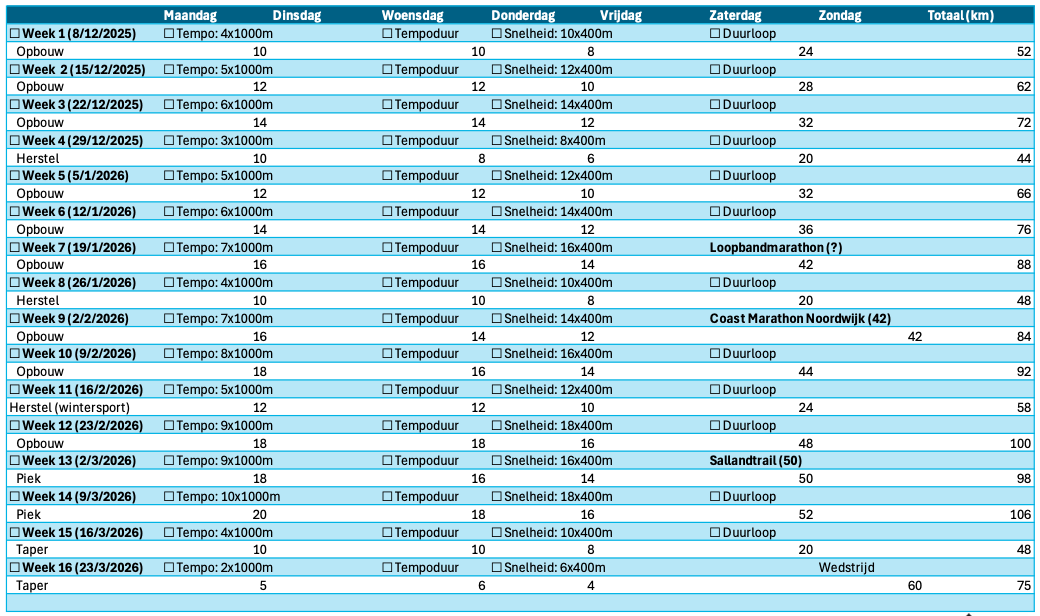
Mijn trainingsschema voor De Zestig van Texel
Ik denk dat ik, zoals ik al eerder schreef, de voorbereiding (weer) té serieus heb aangepakt en De Zestig van Texel te veel als ‘marathon-plus’ heb beschouwd, met een schema dat veel, waarschijnlijk vrij onnodige, tempo- en intervaltrainingen bevatte en, zo leerde ik later van andere lopers, waarschijnlijk toch wel wat veel echt lange duurlopen. Gelukkig was zeker niet alles kommer en kwel, hoor; zo was mijn eerste ervaring met een back-to-back-duurloop erg goed.
We kwamen zaterdagochtend al aan en namen pas maandagmiddag de boot terug naar het vasteland. Mijn vrouw liep zaterdagmiddag haar laatste lange duurloop van 35 kilometer voor de Marathon van Rotterdam, ik liep zondag De Zestig van Texel en de rest van de tijd hebben we lekker gefietst, gerust, pizza gegeten en op maandagochtend lekker buiten de deur ontbeten. Dat laatste overigens na een onstuimig strandwandelingetje met onze zoon, die gebiologeerd keek naar het overvloedige zeeschuim in de branding en er vermoedelijk in was gedoken als we hem niet hadden tegengehouden. Hoewel ik rustig ga herstellen van deze ultra, was het weekend zelf, in ieder geval in mentaal opzicht, misschien wel het beste herstelmiddel.
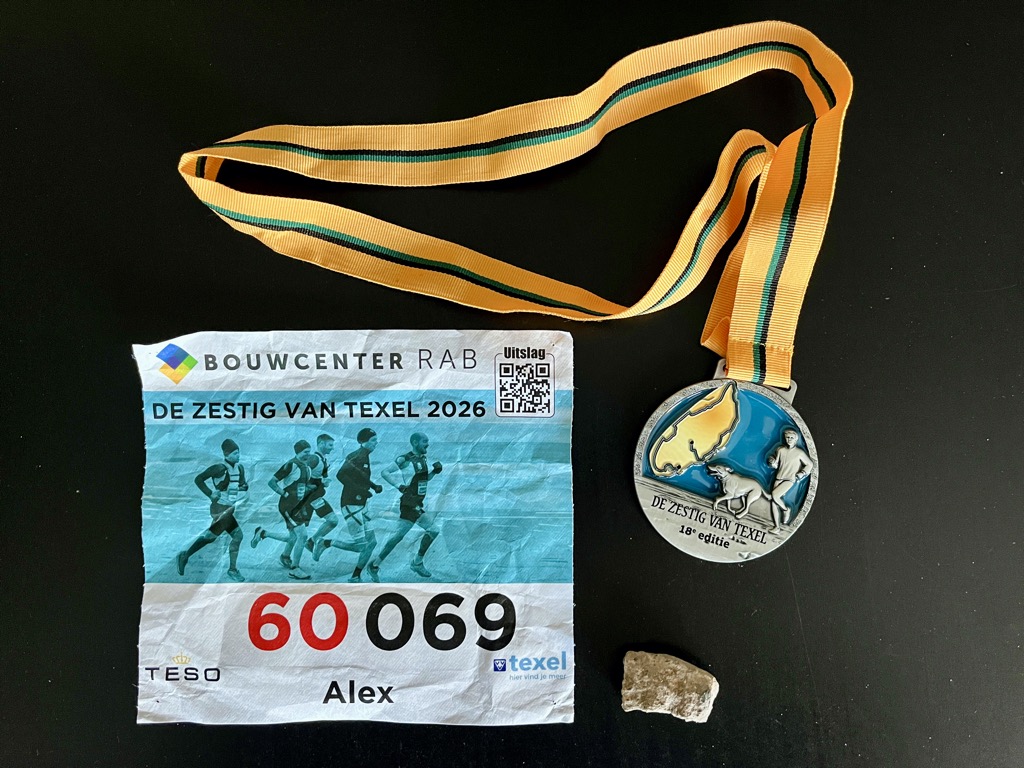
Startnummer, medaille en een aandenken uit mijn schoenzool
De dag na De Zestig van Texel en ook twee dagen erna had ik, op een kleine gevoeligheid aan mijn rechterknie na die inmiddels verdwenen is, geen pijntjes en ook geen spierpijn. Ook tijdens de massage, een cadeautje dat ik mezelf al van tevoren had beloofd, voelde de masseur niets geks, op flink gebruikte spieren en pezen na. Het verbaast me een beetje, maar eigenlijk ook weer niet zo veel. Het was natuurlijk een flinke afstand en een onstuimige tweede helft, maar juist daarom liep ik, ook omdat ik niet zo goed kon inschatten hoe het zou zijn, langzamer dan duurlooptempo, dat vaak rond de 4:20 p/km ligt. Bij een harde wedstrijd — een hele marathon op maximaal tempo — heb ik veel meer last van spierpijn en wellicht heeft de ondergrond er ook mee te maken.
Het gebrek aan spierpijn maakt het, ironisch genoeg, ook wel lastiger om de dag erna te voelen hoe extreem de inspanning was, maar zoals gezegd, de laatste twee kilometer zat ik er goed doorheen en dat was natuurlijk niet voor niets.
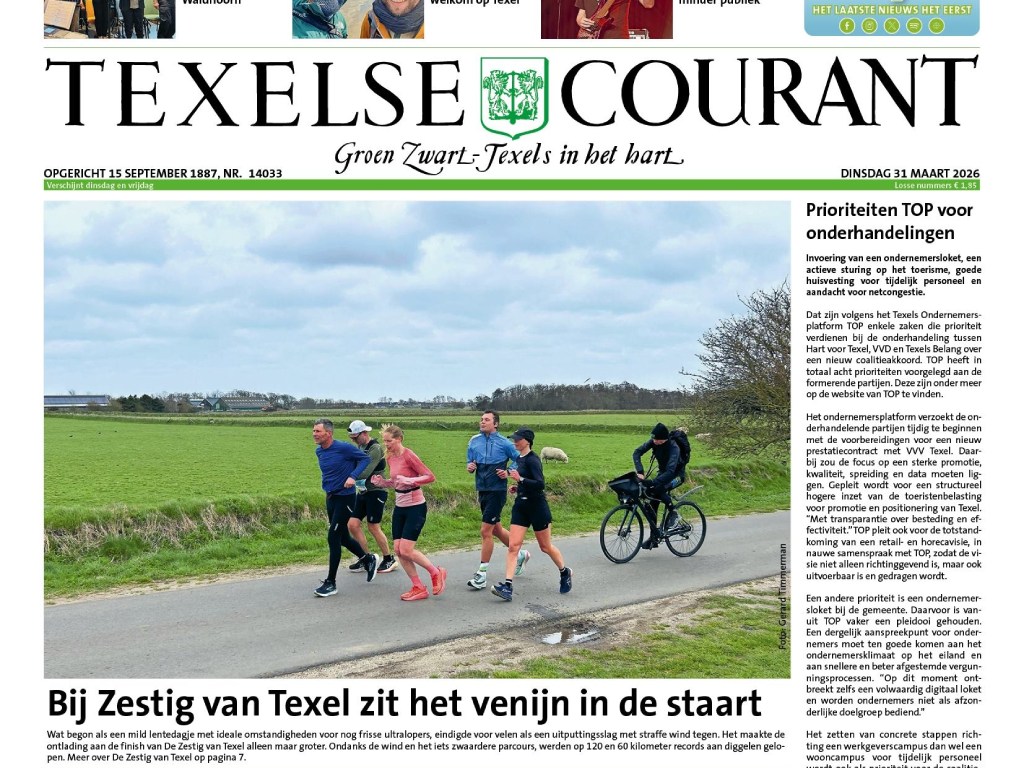
Nog op dag van De Zestig van Texel zelf kopte het Noord Hollands Dagblad ‘Straffe wind is spelbreker bij De Zestig van Texel’ en dag later, in dezelfde krant: ‘Straffe tegenwind maakt het deelnemers aan De Zestig van Texel lastig.’ Ook de Texelse Courant geeft een wedstrijdverslag waarin de wind een grote rol speelt: ‘Het begon als een milde lentedag, lekker weer voor nog frisse ultralopers eindigde met bittere kou en straffe wind als een uitputtingsslag. […] Op het strand kregen de lopers te maken met een stevige teenwind uit het noordwesten, die later op de dag draaide naar het zuidwesten, oplopend tot kracht 6.’
De Texelse Courant
De krant verhaalt verder dat er goede tijden werden gelopen en dat was ‘opmerkelijk, aangezien het parcours dit jaar iets was aangepast en zelfs meer strand bevatte, traditioneel een zwaarder onderdeel.’ Ook op Ultraned vind je overigens een wedstrijdverslag — de moeite waard om te lezen als je interesse hebt.
Al met al was het een zware ultra. Voor mij was het bovendien de eerste keer dat ik zestig kilometer liep. Mijn vorige langste afstand was, jaren geleden, een trail van zo’n 55 kilometer. Wat me opviel, was dat ik, net als vele anderen, grotendeels alleen kwam te lopen, maar dat er, bij de start en finish en ook bij het inhalen, onderling contact was. Een woord, een knikje, elkaar even oppeppen. Dat helpt meer dan je denkt.
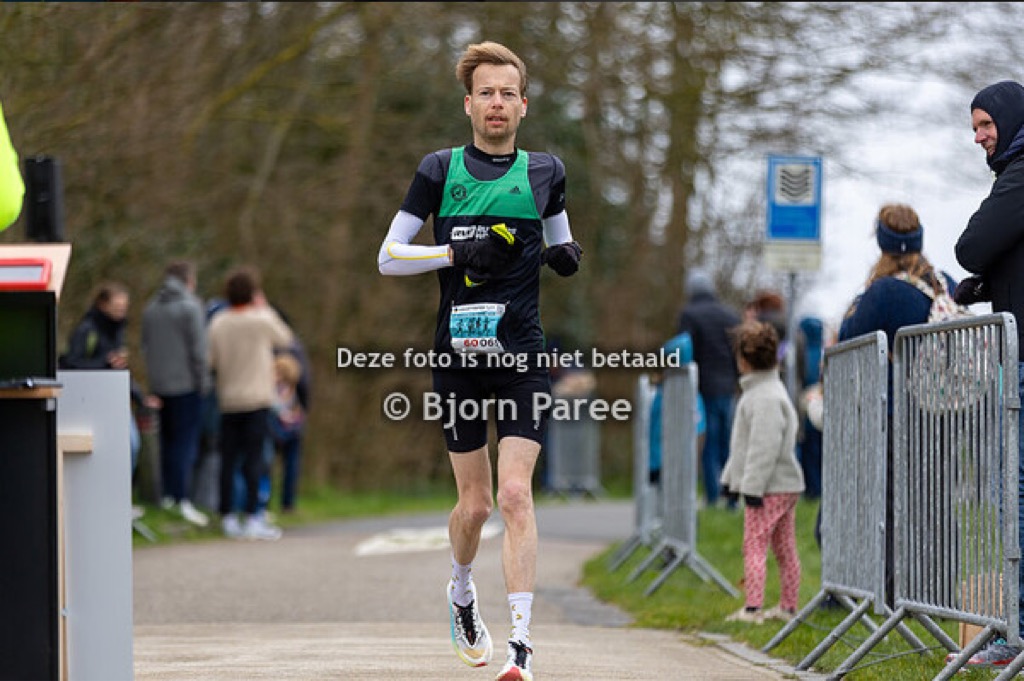
Na zestig kilometer (en een beetje) over de finish (foto door Bjorn Paree)
Fysiek ging het verrassend goed. Geen maagproblemen, verstandig gebruikgemaakt van de verzorgingsposten, gels afgewisseld met banaan. De peesontsteking die, in nasleep van de Sallandtrail, de week ervoor opspeelde, hield zich rustig, maar ik had nog steeds een pijnlijke plek waar de kies zat die na een wortelkanaalbehandeling toch is getrokken. Dat hielp niet, want ik voelde het resterende gat geregeld kloppen. Pas de vrijdag voor de De Zestig van Texel kwam ik de dag redelijk door zonder pijnstillers. Mentaal ging het ook niet slecht; ik werk daar ook aan, samen met een psycholoog, want ik had er een handje van bij tegenzittende omstandigheden enorm te gaan foeteren – op die omstandigheden, maar vooral ook op mezelf. Dat deed ik deze keer niet. Net als bij de Kustmarathon in 2025 was er, toen de wind echt tegen begon te zitten, het besef dat ik hier zelf voor had gekozen, dat je een kust- of waddenwedstrijd niet loopt om de milde omstandigheden en dat dit nu juist de ervaring maakt tot wat ‘ie is.
Zoals ook de aangehaalde krantenartikelen vertellen, ontnam de wind de lopers en dus ook mij de laatste energie. De energie was op een gegeven moment echt op — de tank leeg. Gelukkig stonden mijn vrouw en zoontje bij de finish en daar keek ik al kilometers naar uit. Ook de warmte in de StayOkay waar de eindstreep lag, was welkom, evenals de soep die daar werd geschonken en de pannenkoek die mijn vrouw voor me had meegenomen. Dat was genieten. Het fietsritje terug naar De Koog, een kilometer of zes, was heerlijk — eindelijk de wind weer in de rug.
De Zestig van Texel 2026 #5: vier uur en 58 minuten
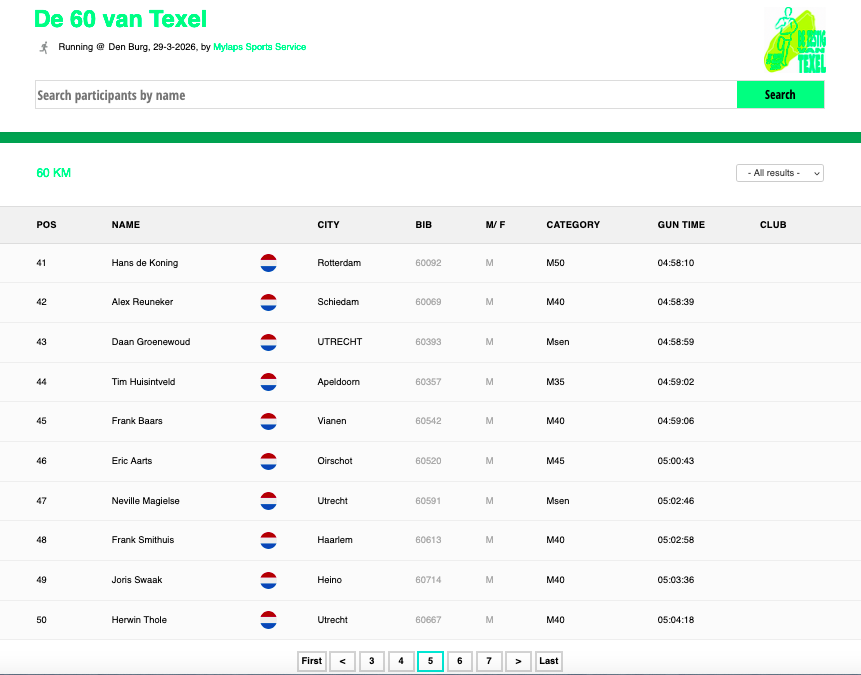
Uiteindelijk finishte ik in 4:58, al had ik na 58 kilometer eigenlijk helemaal geen oog meer voor de eindtijd. Als ik eerlijk ben, was ik met de genoemde tijd, zeker toen ik eenmaal gefinisht was, best blij. Het was niet de beoogde tijd van 4:45, maar ik vond het sowieso lastig inschatten — een nog onbekende afstand, parcours met flinke stukken strand en duin, en altijd onzekere tijden weersomstandigheden.
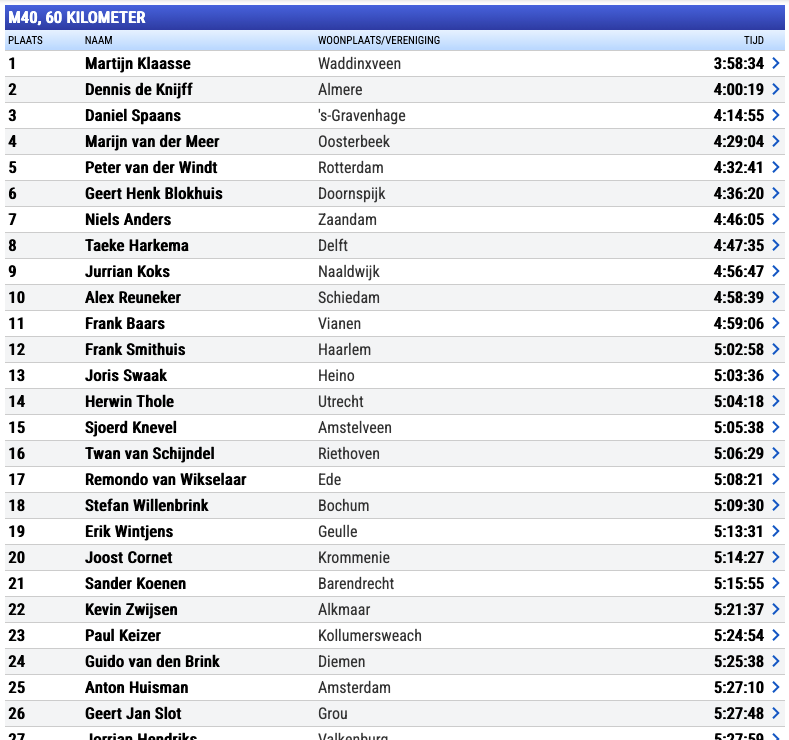
Eindtijd en -positie (4:58:39; 10/98 M40; 42/642 overall)
Waar ik wel van baal, is dat de tank de laatste paar kilometer zó leeg was, dat ik daar echt flink wat minuten heb verloren. Ik heb twee keer honderd meter gewandeld. Ik vind dat, zelfs als het om twee zulke korte stukjes gaat, moeilijk om toe te geven, want ik heb daar wat tegen — hardlopen is geen wandelen in mijn boekje — maar ik meende, heuvel op en inmiddels windkracht 7 vol tegen, niet anders te kunnen. Gelukkig werd ik opgezweept door een andere Rotterdamse loper en daarna kwam de cadans er weer in, maar zoals gezegd, de tank was, ondanks goed koolhydraatstapelen van tevoren en eten en drinken tijdens, op. Te hard gewerkt tegen de wind, denk ik. Ook dat is dus De Zestig van Texel.
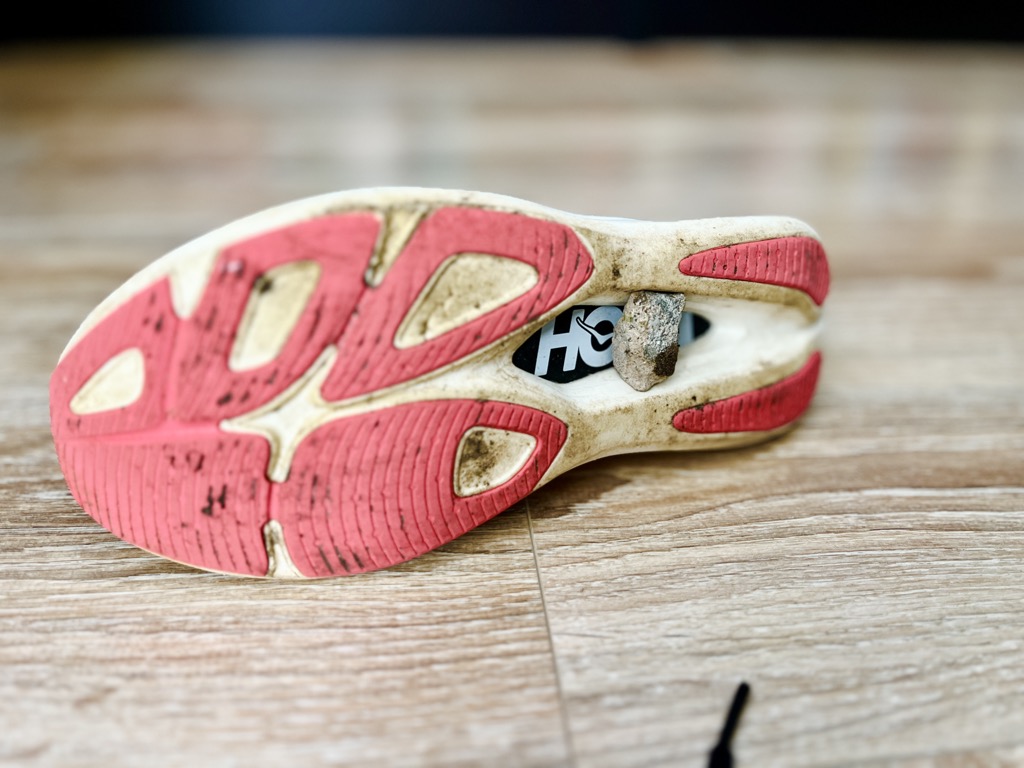
Een flinke kei, waarschijnlijk ‘opgepikt’ op het strand, in mijn linkerschoenzool
Wat overigens vast niet geholpen heeft, is dat ik, the day after, een flinke kei in de zool van mijn schoen vond. Al vanaf kilometer 22, toen we van het strand kwamen, hoorde ik een gek geluid van mijn linkerzool komen. Nu weet ik dat er carbonschoenen zijn die je doen klinken als een galopperend paard, maar dat had ik bij mijn schoenen nog nooit gehoord. Eenmaal thuis na een mooi weekend op Texel ruimde ik mijn schoenen op en een levensgrote steen zat strak in het foam van mijn linkerschoen geklemd. Tot zover het voordeel van lekker lichte wedstrijdschoenen.
Hoewel ik tijdens de wedstrijd niet steeds naar tempo heb gekeken, maar vooral heb geprobeerd het tempo aan te voelen, merkte ik dat het de laatste tien kilometer steeds zwaarder ging. Nu heb ik mijn bouw en gewicht niet mee voor zware omstandigheden, denk ik — ik ben licht en je blaast me, bij wijze van spreken, zo omver. Zoals ik al eerder schreef over onder andere de Sallandtrail, maar ook over lokale wedstrijden met stukken zand, zoals de 10 kilometer in Ter Heijde, trek ik bij dit soort omstandigheden qua kracht in de bovenbenen vaker aan het kortste einde. Daar zou ik, als ik dat wil, eens aan kunnen werken, want qua algehele conditie ging het op dat punt goed.
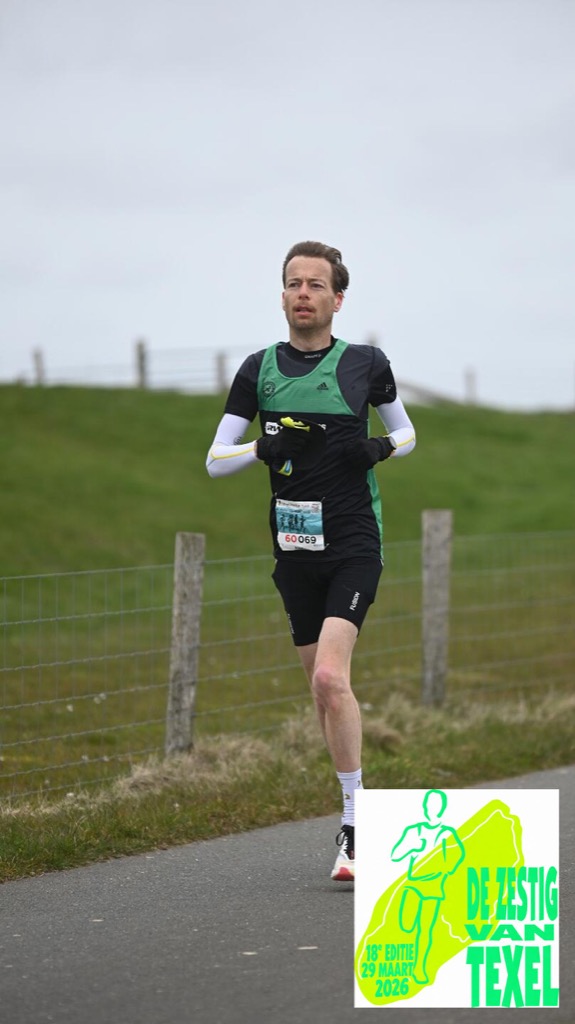
Flinke wind tegen
Ik had het gevoel bij elke stap achteruit geblazen te worden en dat was te zien aan het tempo, dat op een gegeven moment zelfs zakte naar 6:00 per kilometer. Dat had ik nog nooit meegemaakt. Ik zag verschillende, sterk ogende lopers, langs de kant zitten. Ik kon doorlopen, maar het waren vooral mijn bovenbenen die protesteerden. Had ik het verkeerd ingeschat? Ik denk het eigenlijk niet, want hoe schat je zulke wind in? Tijdens de Kustmarathon in 2025 was het verval niet zo groot, maar ook daar had ik het met de wind erg zwaar. Ik zie het ook aan de tussentijden: op kilometer 55 was er een stuk beschutting en direct ging het tempo weer flink omhoog – de energie was er dus nog wel. Helaas was het de laatste twee kilometer echt op en de focus verschoof naar ‘blijven hardlopen.’