Hoewel ik De Zestig van Texel niet met een bepaald tijdsdoel inging, leek het me wel verstandig enig idee te hebben van tempo en eindtijd. Gezien de training en hoe het het afgelopen jaar gaat, vermoed ik ongeveer een 2:50-marathon in me te hebben. Ik bedacht dat ik, na wat berekeningen (zie Tijdsvoorspellingen Zestig van Texel) en wat inschatten, zou mikken op 4:45 uur. Het tempo is dan makkelijk te berekenen, want met zestig kilometer is dat 4:45 minuut per kilometer; er gaan immers zestig minuten in een uur en zestig seconden in een minuut, maar uiteraard ook zestig kilometer in De Zestig van Texel.
Tot rond de veertig kilometer de echte tegenwind begon, waarover in de volgende post meer, liep ik gemiddeld zo’n 4:30 per kilometer. Te hard, dat wist ik, maar het voelde goed en met het eerste stuk wind mee had ik moeten afremmen om langzamer te lopen. Dat leek me niet verstandig. Het voelde als een rustige duurloop en het was zeker geen kwestie van te hard starten; eerder van inspelen op de omstandigheden. Na een tijdje de wind schuin tegen te hebben gehad, begon de volle tegenwind zo rond het veertigkilometerpunt. Daardoor zakte het tempo van 4:30 naar zo’n 5:00 per kilometer en dat vond ik prima — zo was het, dacht ik, te doen en zou ik niet te veel energie verbruiken. Ook dat was inspelen op wat een eiland zo mooi, maar ook grillig maakt.
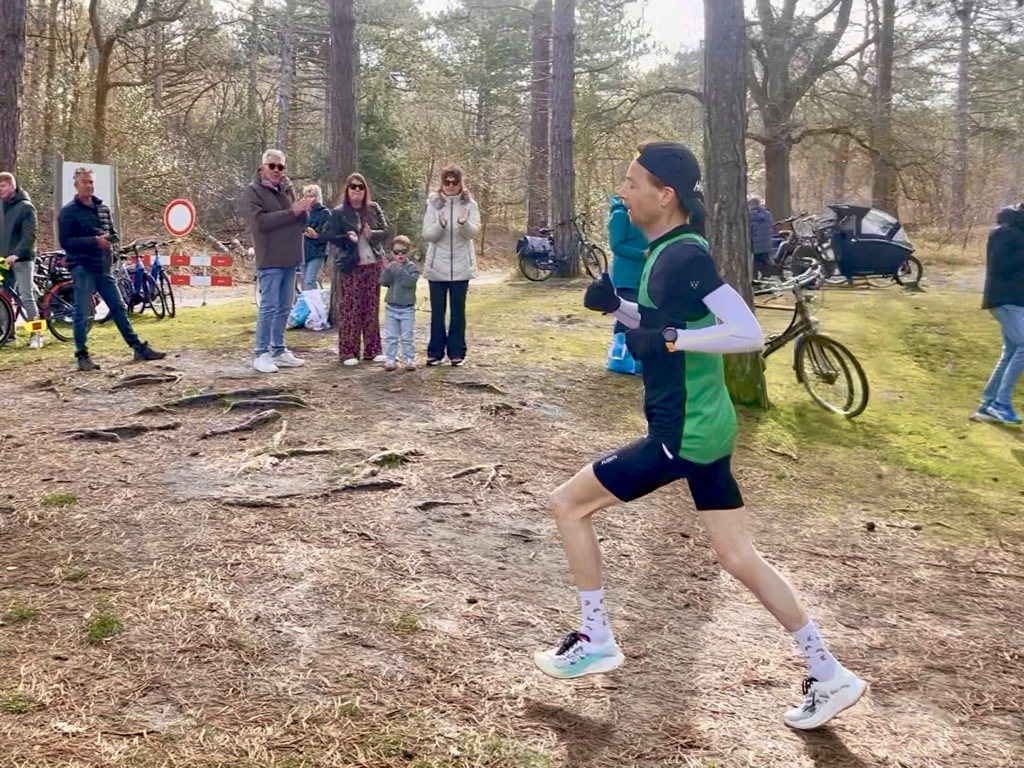
Rond het veertienkilometerpunt, tussen twee stukken strand in
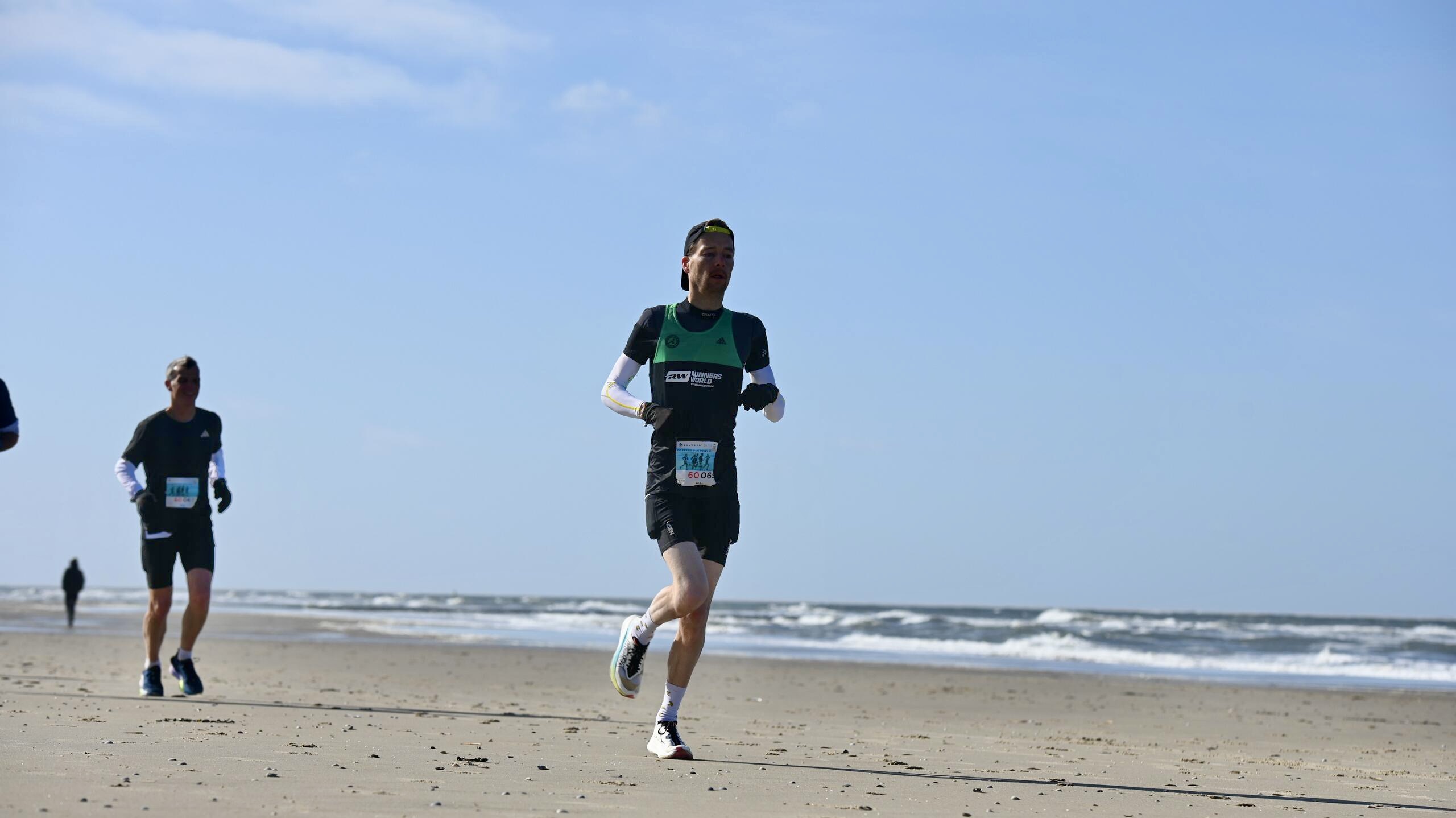
Op de foto’s zie je vooral zonnige omstandigheden, maar de wind is grotendeels onzichtbaar — wat zeker niet betekent dat ‘ie er niet was. Ik kwam het punt van de marathon, net voorbij de 42 kilometer, zonder enige moeite in 3:10 uur over (gemiddeld precies 4:30 p/km) en dat was ruim binnen de planning.
De eerste twintig kilometer van De Zestig van Texel 2026 voerden over het strand en waren nog vriendelijk. De omstandigheden waren goed genoeg om een ritme te vinden, het zand lag er grotendeels goed bij. De eerste helft was schitterend; strand, duinen het laatste stuk tot aan de vuurtoren over een verhard fietspad, maar toch dicht bij zee. Ik moest steeds aan Nijntje aan zee, dat we voor ons zoontje mee naar Texel hadden genomen. In Nijntje-verhaaltjes zit een duidelijk metrum en dat klonk door mijn hoofd, precies op de cadans — heerlijk.
De eerste helft met veel (goed) strand
Het echte werk begon pas nadat we bij de vuurtoren langs de oostkant van het eiland zuidwaarts liepen. De laatste (dik) twintig kilometer was het pal tegenwind. Niet zomaar een briesje; nee, een flinke tegenwind die ook nog snel aantrok. Het werd windkracht 6-7; een wind die het tempo langzaam maar zeker uit je benen zuigt.
Hoewel de organisatie heel duidelijk was over begeleidende fietsers — die moeten achter de loper(s) blijven: ‘De fietser dient zich achter de loper te positioneren. Het is een fietser niet toegestaan om de deelnemer te pacen.’ — zag ik tussen De Cocksdorp en Oost en tussen Oosterend en Oudeschild verschillende lopers die door ‘hun fietser’ uit de wind werden gehouden. Tijdens de wedstrijd heb ik me daarover gelukkig niet druk gemaakt, maar fair vind ik het niet. Uit het wielrennen weet ik hoeveel het kan schelen — iemand die je, zeker met deze windkracht, uit de wind houdt, biedt je een heel flink voordeel.
Nu appte een collega die ik toevallig zaterdag tegenkwam in De Koog me dat ze, toen ze haar vriend supportte, het niet op een echte wedstrijd vond lijken, maar dat was, gok ik, achterin; voorin was het toch echt wel anders. Nu loopt iedereen natuurlijk zijn eigen tempo en zeker bij ultra’s kan dat nogal uiteenlopen, maar voorin werden groepjes gevormd en werd naast samengewerkt tegen de elementen ook aardig gestreden. In de volgende post meer daarover.
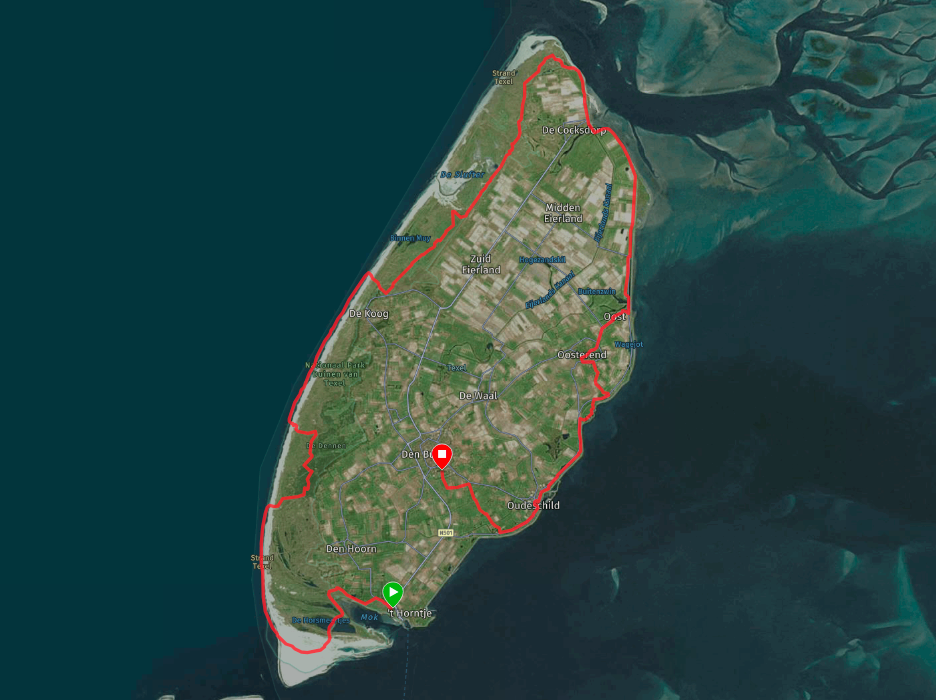
De Zestig van Texel eergisteren, zondag 29 maart 2026, was een wedstrijd waar je eigenlijk alles in één dag krijgt: prachtige natuur, eindeloze vergezichten, strand, duinen, bos en een heel stevige portie wind. De route is simpel: zestig kilometer rondom het eiland, vanaf ’t Molwerk bij haven ‘t Horntje tegen de klok in langs de randen van het eiland naar de finish in Den Burg.
Het gelopen parcours van de Zestig van Texel
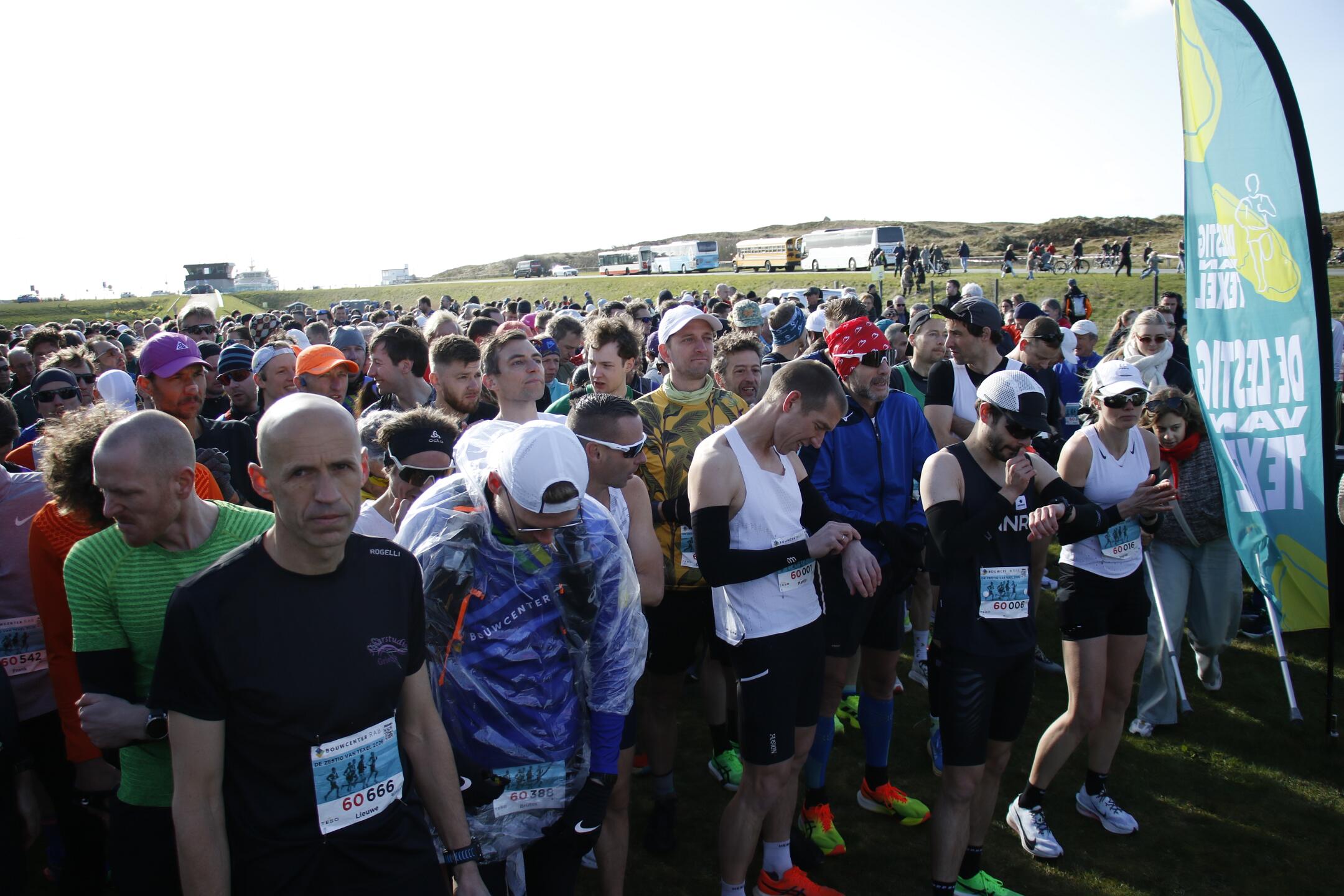
De dag begon stressvol met onduidelijkheid over de bus van sporthal TXL naar de start — we stonden met een groepje te wachten, terwijl de bussen, die niet met bordjes of andere markeringen waren aangegeven, al weg waren en niet (meer?) pendelden. Gelukkig ging liften vlot en kregen we er een leuk gesprekje bij met, uiteraard, andere Zestig-lopers. We waren allemaal gelukkig nog ruim op tijd bij het startvak, waar ik wat bekenden tegenkwam — een collega van wie de partner meedeed, maar ook lopers die ik van lokale wedstrijden ken en iemand die ik uitgebreid sprak tijdens de Sallandtrail. De sfeer op Texel was sowieso goed en daar werd ik erg blij van.
Toch nog goed op tijd in het startvak bij ‘t Horntje. Ik sta rechts, in zo’n beetje de derde ‘rij’.
Omdat ik niet al te lange posts wil schrijven, en omdat het toch wel een heel bijzondere ervaring was, volgt in een aantal volgende posts uiteraard meer over het verloop van de wedstrijd, de wind, maar ook de training, het resultaat en… een kei in mijn schoenzool.
NB Ik schrijf een aantal posts en dus redelijk uitgebreid over De Zestig van Texel. Ik vond in mijn eigen voorbereiding online niet heel veel ervaringen van anderen, dus wie weet heeft iemand hier, over twee, vier of nog meer jaren, iets aan.
De laatste looptraining voor de Zestig van Texel zit erop — vanmorgen deed ik een nog korte intervaltraining (6 keer 400 meter op 3:40) en ik voelde me aan het einde best gretig. Dat is wel een goed teken, denk ik.
Zoals eerder geschreven zijn de twee taperweken niet ideaal. Zo had ik veel last van een wortelkanaalbehandeling en uiteindelijk het trekken van kies. Vooral de naweeën van die laatste ingreep, die uiteindelijk beter door een kaakchirurg dan door een tandarts uitgevoerd had kunnen worden, duren nog steeds voort, maar de pijn neemt inmiddels wel wat af en ik neem alleen nog in de avond pijnstillers. Daarbij komt dat ik een ontsteking van de peesschede in mijn linkeronderbeen heb en al is die nog niet verdwenen — het gaat wel de goede kant op. We gaan het zien op Texel.
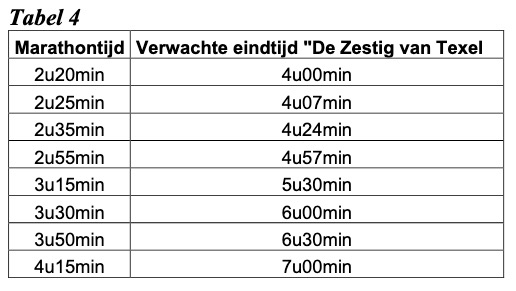
Lastig is te bedenken op welk tempo ik aanstaande zondag wegga. Uiteindelijk zullen het parcours en de omstandigheden een grote rol spelen, maar het is toch wel fijn iets van een richttempo/-tijd hebben, denk ik. Op de website van de Zestig van Texel geeft Gerrit van Rotterdam in zijn trainingsgids de onderstaande tabel met verwachte eindtijden op basis van (weg)marathontijden.
Verwachte eindtijden Zestig van Texel (bron: Van Rotterdam, Gerrit. Trainen voor de Zestig van Texel.
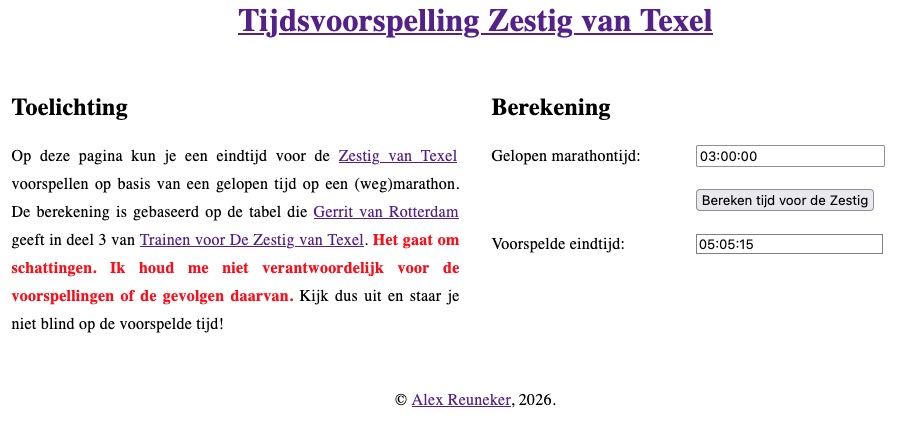
Omdat er een beperkt aantal marathontijden in staat, heb ik een klein calculatortje gemaakt dat op basis van een zelf in te voeren marathontijd een voorspelling geeft die overeenkomt met de genoemde tabel.
Zestig van Texel-calculator
Het gaat expliciet om schattingen. Ik houd me dus niet verantwoordelijk voor de voorspellingen of de gevolgen daarvan. Kijk uit en staar je niet blind op de voorspelde tijd! Dat prent ik mezelf ook in.
Een vast, hoewel niet beoogd onderdeel van de taper lijkt wel de taper blues te zijn. In de weken voor de wedstrijd waar je naartoe hebt getraind neem je gas terug en dan heb je, naast rust, of misschien wel dóór die rust, vaak het idee dat je meer pijntjes hebt — die vaak niets blijken, meer twijfels. Dat valt dit jaar, met De Zestig van Texel, eerlijk gezegd mee, al heb ik er nu juist wel reden toe.
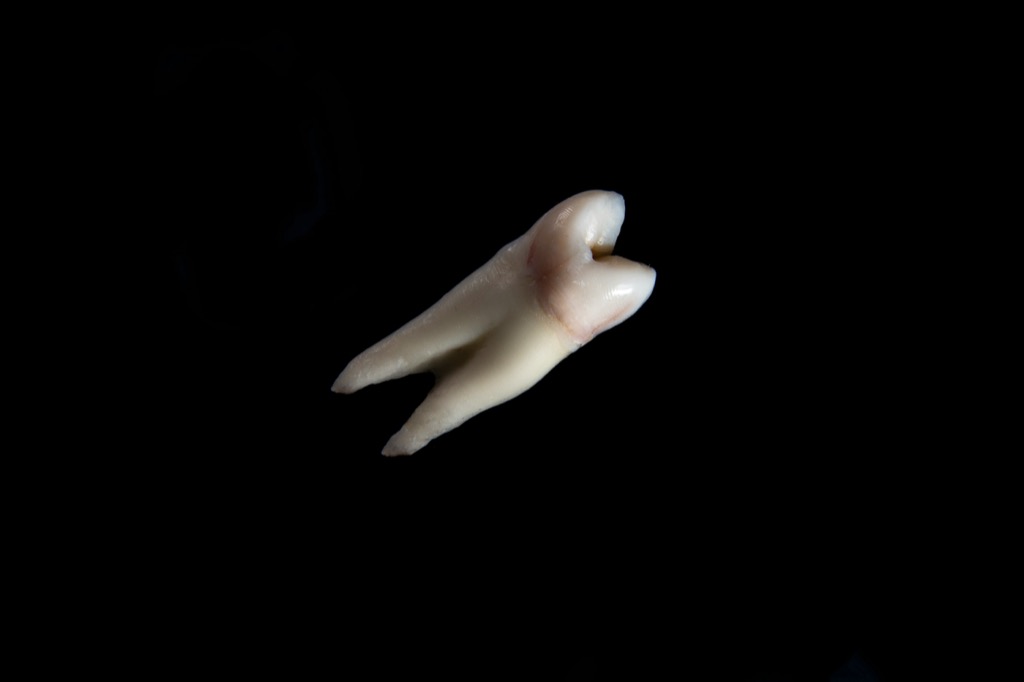
De eerste reden is dat ik al anderhalve week aan het tobben ben met een kies. Die speelde al eerder op, maar de kiespijn werd steeds heviger inmiddels ben ik drie tandartsbezoeken, een wortelkanaalbehandeling en uiteindelijk toch een extractie (het trekken van de kies) verder. Ik had een zogenaamde cracked tooth, waardoor er etensresten in de kies kwamen, die vervolgens ontstekingen tot in het kaakbeen opleverden. Geen pretje en hoewel ik nu, twee dagen na het trekken, nog veel pijn heb, is het ding er inmiddels wel uit en zou de pijn na vandaag moeten afnemen.
De tweede reden is dat ik sinds de Sallandtrail last had van mijn linkerenkel/-onderkant van mijn scheen. Nu heb ik lang geleden wel eens shin splints gehad, maar dit voelde anders. De fysio heeft het onderzocht en was duidelijk: een ontsteking van de peesschede (tenosynovitis), een ‘soort kokertje waarin de pees heen en weer glijdt en dat de pees beschermt en vochtig houdt.’ De oorzaak is ook duidelijk: het ongelijke terrein en vooral de vele hoogtemeters van de Sallandtrail die ik niet gewend ben en waar ik, eerlijk is eerlijk, niet op getraind had.
Dat ik, vanwege mijn kies, de week na de Sallandtrail ontstekingsremmende pijnstillers heb geslikt, heeft averechts gewerkt, want zo kon de ontsteking niet op gang komen en dat gebeurt nu dus alsnog. Balen, maar zoiets weet je pas achteraf. Op zich zou de ontsteking met wat meer rust, maar nog wel beweging en dus geen ontstekingsremmers in een paar dagen moeten afnemen, maar die ontstekingsremmers heb ik weer nodig voor de kies. Een soort catch 22 dus.
Al met al reden genoeg dus voor een echte taper blues, maar op de een of andere vind ik het nu makkelijker om te relativeren. Ja, het is balen, maar het is wat het is en we gaan het de komende week wel zien. Het leert me ook twee dingen. Ten eerste valt het me nu pas echt op hoezeer ik mijn lichaam in het verleden als een soort machine beschouwde; bestaand uit onderdelen die enigszins onafhankelijk van elkaar functioneren. Je gebruikt je kies niet tijdens het hardlopen, dus die dingen staan los van elkaar. Inmiddels merk ik sterk dat het zo niet werkt; heb je een flinke ontsteking in je lichaam, of een ander kwetsuur, dan is je hele lichaam bezig met herstellen. Dat heeft daarmee invloed op je hele lichaam, niet ‘slechts’ op een kies, kaak of pees. Ten tweede merkte ik dat de gedachte ‘straks heb ik al die trainingen voor niets gedaan’ eigenlijk direct werd gevolgd door de gedachte dat een doel als een (ultra)marathon ook de moeite waard moet zijn om de weg ernaartoe en die heb ik inmiddels wel afgelegd, niet alleen om de eindstreep.
Komende week meer rust, hopelijk minder (kies)pijn en met wat hoop en voorpret naar zondag 29 maart uitkijken.
Welk woord hoor je het meest in Nederlandstalige popmuziek? Dat is ik. We zingen blijkbaar vaak en graag over onszelf, want dit persoonlijke voornaamwoord komt ruim vierhonderd keer per 10.000 woorden voor.
Willy en Willeke Alberti (ja, vader en dochter) spanden al in 1967 de kroon met Dat afgezaagde zinnetje, waarin ik 26 keer voorkomt. Daarmee is deze onderwerpsvorm, eerste persoon enkelvoud goed voor bijna 14 procent van alle woorden in deze creatieve hertaling van Frank en Nancy Sinatra’s Something stupid. Ter vergelijking: in ‘normaal’ gesproken Nederlands is niet ik, maar ja het meest voorkomende woord met 287 keer per 10.000 woorden, al scoort ik ook hier niet slecht.
Zingen we dan niet graag over of tegen een ander? Zeker wel, want op nummer 2 staat, met 300 keer per 10.000 woorden, je. Het nummer met de meeste je’s? Dat is Wat zou je doen van Bløf uit 1998, waarin het maar liefst zestig keer voorkomt.
Op het trainingsschema voor De Zestig van Texel stond voor dit weekend eigenlijk een lange duurloop van 52 kilometer. Toch twijfelde ik er vanaf het begin al aan of deze lange duurloop, twee weken voor De Zestig van Texel , nodig en vooral verstandig was. Ik had immers week na week al meerdere echt lange duurlopen gedaan, inclusief een zware trail van ruim 50 kilometer vorige week. Zou amper een week daarna 52 kilometer me niet meer uitputten dan voorbereiden? Na wat gesprekken met andere ultralopers tijdens deze Sallandtrail besloot ik het anders te doen: geen 52 kilometer in één keer, maar een zogenaamde *back-to-back*. Nu loop en vooral liep ik wel vaker meerdere dagen achter elkaar, maar dan eigenlijk nooit twee lange(re) duurlopen en ook niet zo gericht.
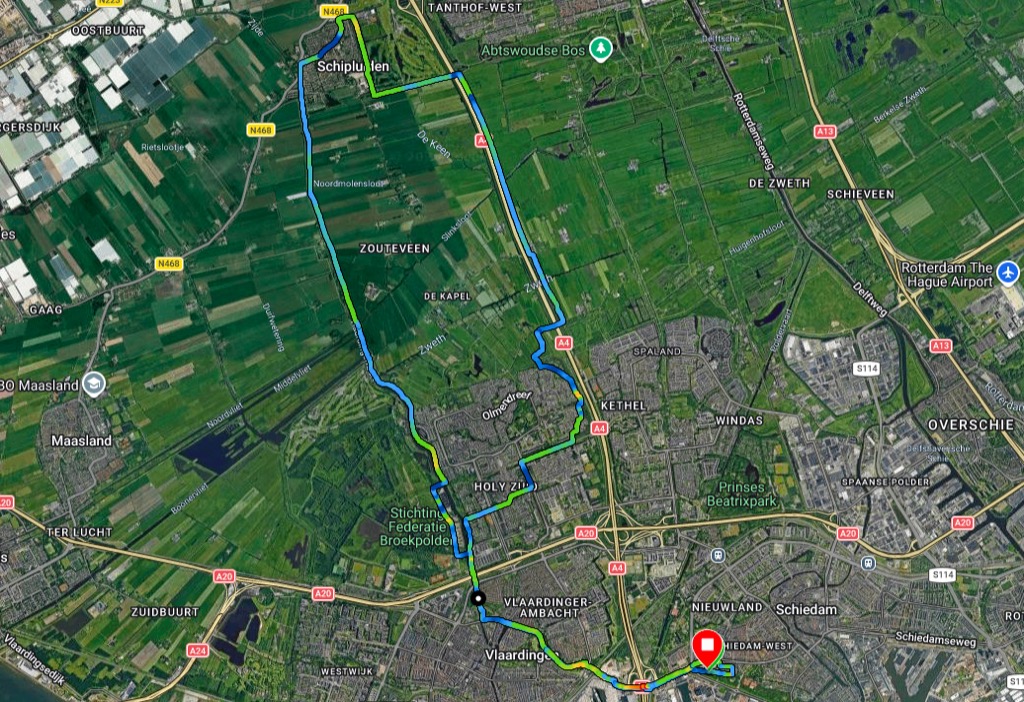
Een *back-to-back*-duurloop is een training die veel wordt gebruikt in de voorbereiding op ultramarathons. In plaats van één extreem lange training te doen, verdeel je de afstand over twee opeenvolgende dagen. Het idee daarbij is simpel: je loopt de tweede training met vermoeide benen en daar zit de trainingsprikkel. In een ultraloop kom je namelijk onvermijdelijk in een fase waarin alles zwaar wordt. Door twee dagen achter elkaar lang te lopen, boots je dat gevoel van vermoeidheid na, zonder dat je lichaam, in mijn geval nogmaals, de enorme belasting van één ultralange training hoeft te verwerken. Daarom liep ik vrijdag 26 kilometer, inclusief 5×1000 meter op tempo (doordat ik de babyfoon in de gaten hield noodgedwongen op de loopband, maar toch fijn dat dat kan!) en zaterdag nog eens 26 kilometer.
Rondje Schipluiden
Ik vond beide trainingen zwaar, maar dat komt ook doordat de Sallandtrail nog geen week geleden was en er ook doordeweeks in deze piekweek aardig wat trainingen op het programma stonden. Bij de tweede dag merkte ik inderdaad, al zal dat ook deels tussen de oren hebben gezeten, dat ik al bij de start vermoeide benen had. Toch voelde het goed en vooral effectief. Je start namelijk met benen die nog duidelijk laten weten wat ze gisteren hebben gedaan. Alles voelde net wat zwaarder, al kwam ik na een kilometer of 10, eenmaal ter hoogte van Schipluiden, wat beter in het ritme. De nog steeds flinke wind tegen was toen grotendeels voorbij en het weer was verder prachtig; een wolkendek, maar ook een zonnetje dat daardoorheen probeerde te komen.
In een weekend (vrijdag even meegerekend) staat er nu dus 52 kilometer op de teller. Voor mij voelde dat als een verstandige keuze: zwaar genoeg om vertrouwen te geven, maar ook voldoende ruimte om goed aan de taper te beginnen, want die fase staat vanaf maandag op het programma. De laatste twee weken voor De Zestig van Texel draait het om kortere trainingen, rust nemen, herstellen en hopelijk fris aan de start staan. Dat klinkt simpel, maar voor veel lopers is het een lastig onderdeel van de voorbereiding — je moet erop vertrouwen dat de voorbereiding er grotendeels opzit en dat rust nu belangrijker is dan omvang.
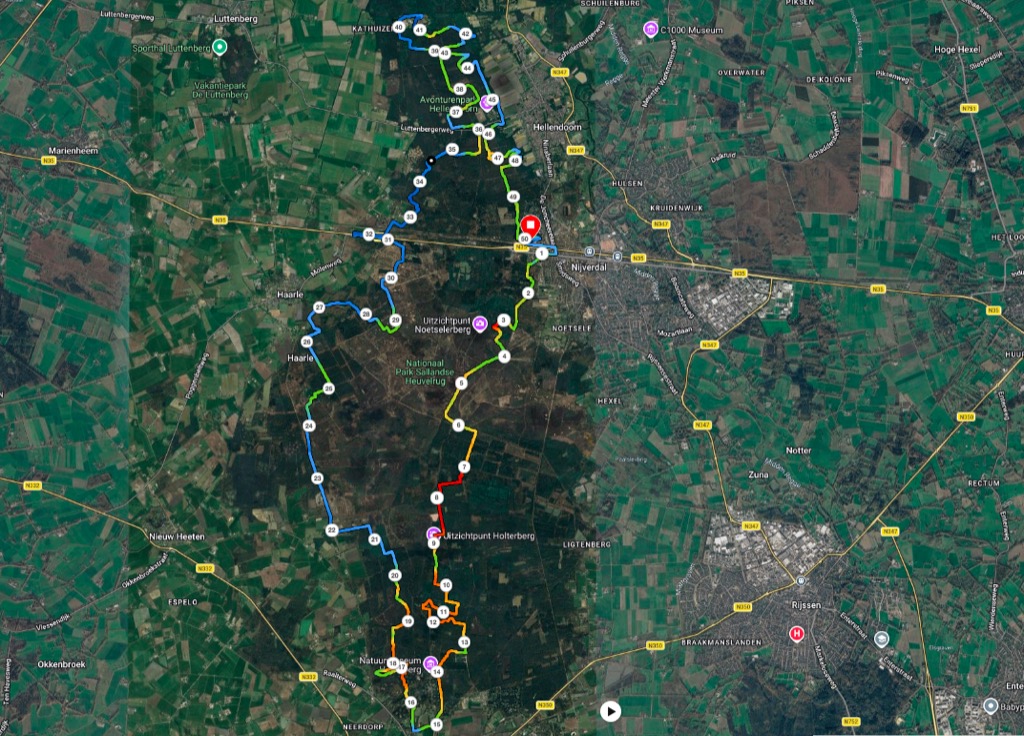
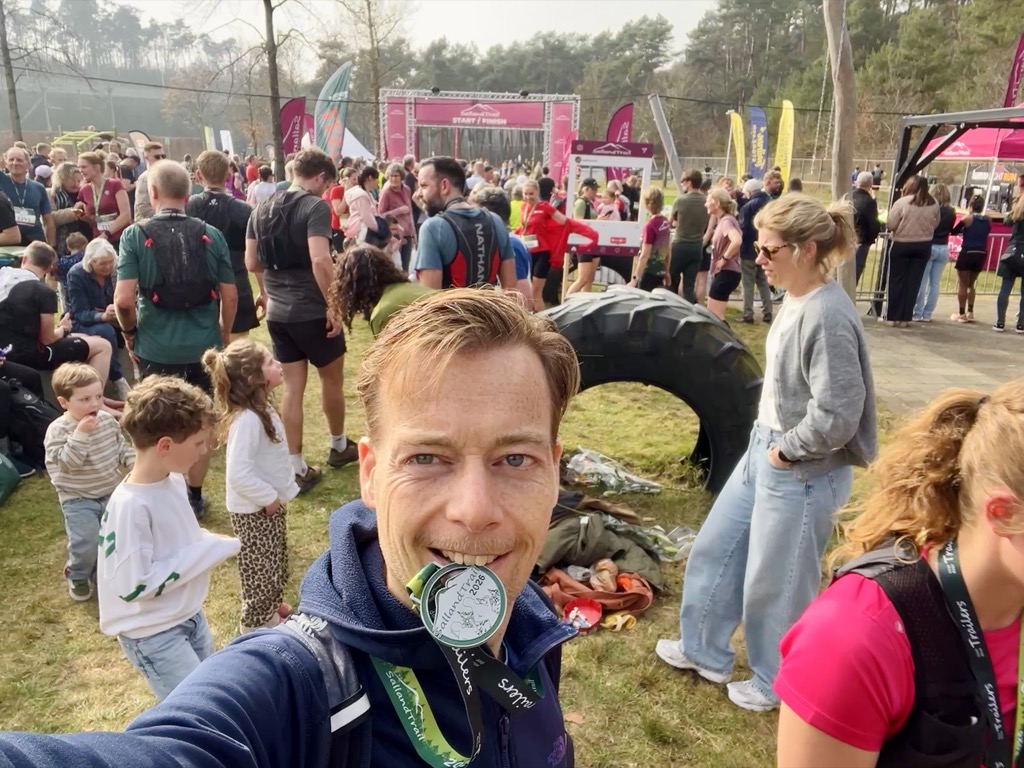
Gisteren liep ik, na dik twee uur rijden naar Nijverdal, diep in het oosten des lands, de Sallandtrail — inderdaad, over de schitterende Sallandse Heuvelrug. De trail van 50 kilometer was ruim 51 kilometer, kende zo’n 700 hoogtemeters en het enige asfalt dat we gezien hebben, was de paar keer dat we een weg moesten oversteken. Lekker onverhard dus!
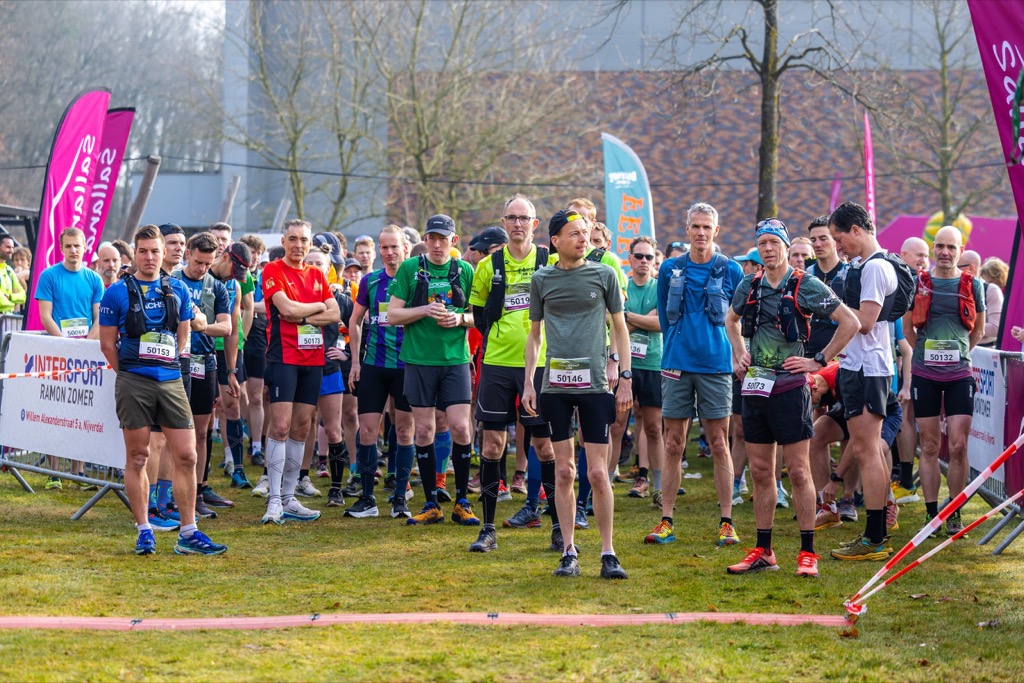
Aan de start van de Sallandtrail 2026
De trail voerde over bos- en zandpaden met dus flink wat grillige hoogtemeters. Het was een prachtig parcours, door heide en bos, maar het was ook een zwaar parcours. Ik merkte ook duidelijk dat ik zulke hoogtemeters, die vooral zwaar waren doordat ze dus vrij grillig waren — flink aantal echt steile klimmen en weinig gestage, maar veel steile afdalingen — niet gewend ben als randstedeling. Mijn benen en dan met name mijn bovenbenen kregen het dan ook flink te verduren. Dat was ook eigenlijk wel de bedoeling, want deze trail was vooral bedoeld als duurtraining voor De Zestig van Texel.
De schitterende trail-route langs onder andere Hellendoorn
Bij de start begon ik wel even aan mijn keuze te twijfelen om geen rugzak om te doen; ik was met zo’n twee anderen van de ongeveer 200 lopers op deze ultra-afstand duidelijk een uitzondering. De twijfel was echter snel weg. Ik had er immers goed over nagedacht: ik had banaan en gels mee in mijn shorts en er waren vier verzorgingsposten waar ik water kon drinken, dus een drinkrugzak was gewoon niet nodig. Daar komt bij dat ik zulke dingen, al heb ik een heel goede van Salomon, verschrikkelijk vind lopen en mijn vrouw de rugzak diezelfde ochtend gebruikte voor haar duurloop ter voorbereiding op de marathon van Rotterdam.
Na de start ging het lekker, al merkte ik duidelijk de opgebouwde vermoeidheid van de steeds langer wordende wekelijkse duurlopen — vorige week nog een 46 kilometer die er, vooral ook door griepherstel en het toen erg slechte weer, erg inhakte. Tot ongeveer 32 kilometer liep het redelijk soepel en kon ik, afhankelijk van het parcours uiteraard, mezelf inhouden niet te hard te gaan en lekker een duurlooptempo aan te houden. Na dit punt echter kwamen meerdere afstanden tegelijk, door verschillende starttijden die zo op elkaar waren afgestemd dat de afstanden ongeveer tegelijk zouden finishen, op het parcours en kwamen we met z’n allen op dezelfde single tracks terecht. Dat er op de kortere afstanden vooral langzamere lopers liepen is natuurlijk helemaal prima, maar het betekende ook weinig ruimte om in te halen en daarmee dat het lastiger werd je eigen tempo vast te houden op het moment dat je dat minder inspanning kost dan constant inhouden en inhalen.
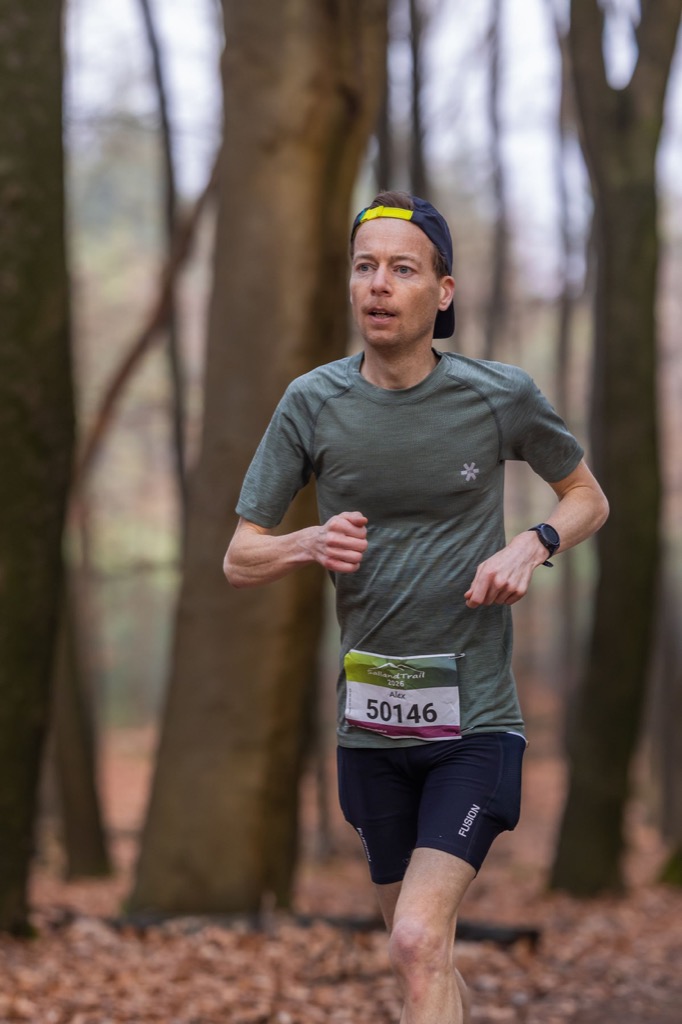
Door de bossen rond Hellendoorn
Rond de 35 kilometer begonnen mijn bovenbenen echt protest aan te tekenen. Niet zo vreemd: ik ben de mulle ondergrond niet gewend en de hoogtemeters al helemaal niet. Een stukje verderop werden we getrakteerd op wat de lokale bevolking van Salland blijkbaar ‘De Kuil’ noemt, die ik vergelijkbaar vond, al wel wat korter gok ik, met het klimduin in Schoorl en dat zegt wel wat. We liepen ‘m tweemaal steil omhoog en naar beneden en dat met toch al flink verzuurde bovenbenen. Ik merkte overigens echt dat dat aan het zand en het klimmen lag; omhoog ging het vooral de laatste tien kilometer, met nog wat verraderlijke klimmetjes, moeizaam, maar op de vlakke stukken en in de afdalingen kon zonder veel moeite tot aan het einde prima tempo houden. Dat gaf vertrouwen. Uiteindelijk werd ik, zag ik ‘s avonds thuis op de bank pas, negende van de ongeveer 200 lopers op deze afstand. Daar ging het natuurlijk niet om, maar toch leuk.
Al voor de start sprak ik wat andere lopers, die een aardige mix van locals en mensen vanuit het hele land bleken. Tijdens de trail liep ik een stuk op met iemand die precies hetzelfde plan als ik bleek te hebben: deze trail gebruiken als voorbereiding op De Zestig van Texel. Het was leuk en nuttig om onderweg trainingservaringen uit te wisselen. Ik vroeg hem naar zijn laatste weken, want ik twijfelde over volgende week. In principe heb ik dat weekend nog een laatste lange duurloop van 52 kilometer gepland staan, maar ik merkte, ook toen ik na afloop nog wat andere ultralopers sprak, dat ik, week in week uit, wel heel veel echt lange duurlopen deed en ik merkte vandaag wederom dat de vermoeidheid zich daardoor flink opstapelt. Bij gebrek aan echt goede literatuur over ultra’s (en dan bedoel ik niet de Amerikaanse literatuur, want die gaat vaak over afstanden van 100 kilometer en langer en vooral over je voorbereiden bergachtige gebieden) heb ik deze voorbereiding, gok ik, waarschijnlijk wat te veel als ‘marathon-plus’ benaderd. Daarom overweeg ik volgende week een zogenaamde back-to-back te doen; niet één duurloop van 52 kilometer, maar twee dagen achter elkaar een duurloop van 25 à 26 kilometer. Dat overwoog ik al eerder, maar ik denk dat het nu verstandig is het schema wat aan te passen. Dat is voor mij sowieso een goede oefening: het schema geen keurslijf laten zijn.
Uiteindelijk was deze ultratrail een goede, zware duurloop. Het weer zat mee, ik heb het zwaar gehad, maar ook genoten van de mensen die er waren, de prachtige omgeving en de organisatie. Het was daarmee een goede training voor Texel, denk ik en daarbij ook een les voor mezelf: wáár je een lange duurloop loopt — op een natte, gure baan of door een prachtig gebied — maakt veel uit. Dat had waarschijnlijk iedereen me wel kunnen vertellen, maar soms moet je zelf iets ervaren.