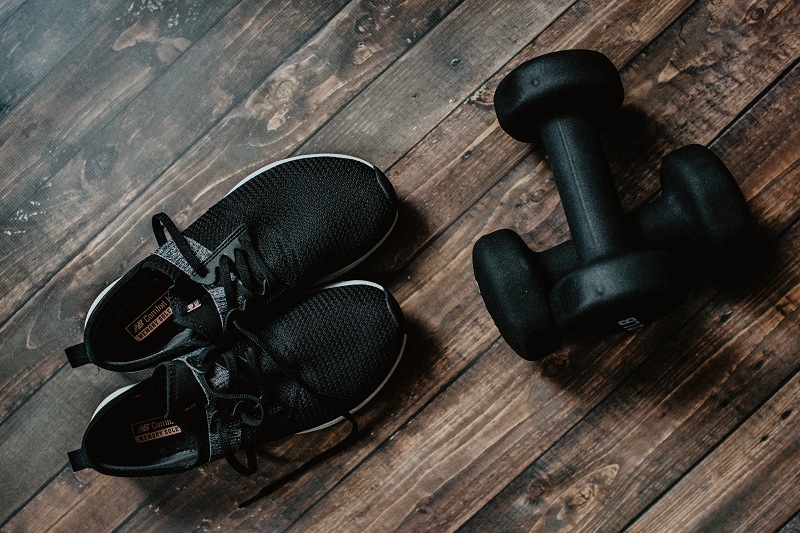
It’s core/cross-training day again, so no running, but an hour of circuit training at the gym at work.
Photo by Kelly Sikkema on Unsplash
Although I’m not really into gyms, weight-lifting et cetera, I do enjoy these workouts, as they are hard to do, but you’re not alone and you get good feedback on your form and technique.
It’s time for a tempo workout with the athletics club today.
The workout
This workout consists of 7 times 1000 meters at lactate threshold — around 3:50/6:10 for me — totaling at 15K including warming-up and cooling-down.
Afterwards
Keeping pace wasn’t hard, apart from one interval with a bridge and a lot of wind. I do feel a bit worried though about a small irritation in my left knee. It’s been there for a couple of days now and I have never had that before. I need to keep a close watch on that.
Workout data
If you want to see the workout, check it on Garmin or on Strava.
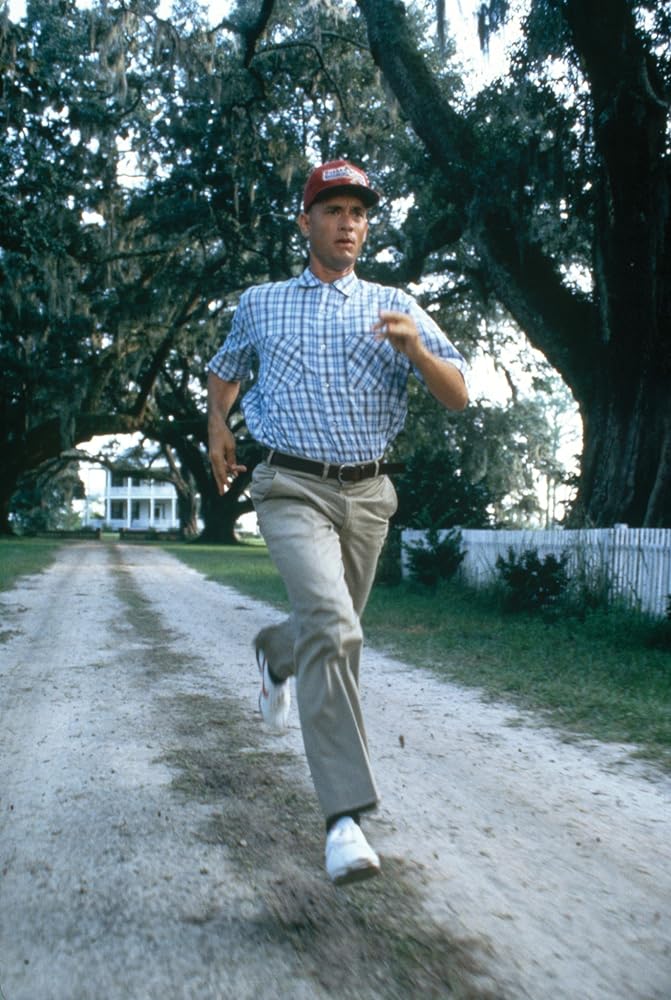
Everyone knows this movie from 1994, right? Well, everyone knows ‘Run, Forrest, Run!’, but I for one hadn’t seen the movie. I had seen bits and pieces before, but a month or so ago me and my wife — who had seen this classic and found it ridiculous that I hadn’t seen it before — watched it. Not in the last part because we went to the States this summer and saw the Bubba Gump Shrimp Shop in LA. I even bought a Bubba Gump shirt, so I should only be allowed to wear that after I’ve seen the movie, right?
Picture: Paramount Pictures
It’s an intriguing movie about a kid with a low IQ, but, as you’ll notice, has a big heart and basically escapes bullying and other problems by running and running fast. Running itself is featured a lot in this movie, but not in terms of races. At one point, Forrest decides to just run through the USA and he gathers a following of people taking inspiration from his runs. We all know running can be inspiring, don’t we?
Today’s plan is a steady long run to build endurance.
The workout
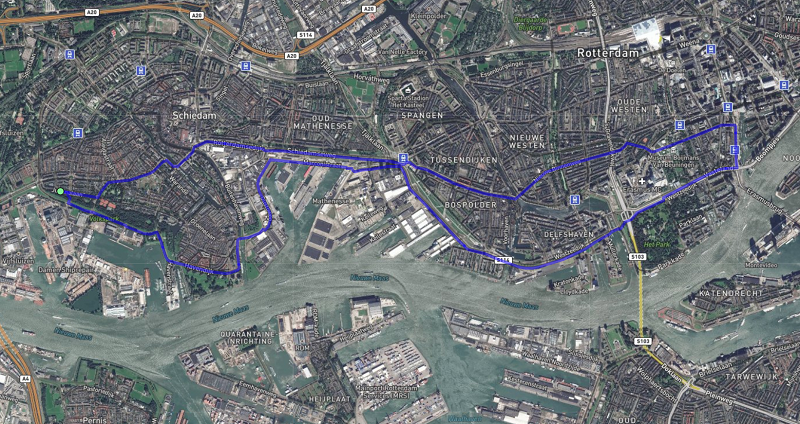
An 18K long run in heart rate zone 2, pace around 5:00/8:00. I created a route on Dynamic Watch, so the plan is run the following route.
Route from Schiedam to Scheepmakershaven and back
Afterwards
The weather was dreadful, but the running went smooth, apart from the kilometer or two I had to run through a busy part of Rotterdam, which involved dodging a lot of cyclists and pedestrians heavily involved in their phones. Keeping a steady pace went well and heart rate stayed low. The rain didn’t really bother me that much, as it isn’t cold yet and once you’re wet, you don’t really notice rain — except when it really pours, of course, which it didn’t.
Workout data
If you want to see the workout, check it out on Garmin or on Strava.
Track day! Today’s the time for a workout to get some speed in.
The workout
The workout consists of 7 times 400m at the track at around 3:20/5:20. That’s less than two weeks ago (which included 10 times 400m), but that’s because there’s a tune-up race on Saturday and I’m trying to keep the 80/20 balance. This doesn’t mean of course sacrificing the speed work itself, which is at the same intensity as in the other speed workouts.
In between the intervals, 200m of active recovery and the distance to and from the track, 2 times 4K, served as warming-up and cooling- down, although, for warming-up, I still did my regular exercises before running.
Afterwards
As I went to the track late in the afternoon, before the evening sessions began, I found the track deserted, which, for a change, was nice – although I do like seeing other runners at the track. The sun was still shining and it was a nice post-summer sun — so, not too hot, a bit of wind and just a great time to be outside.
Photo by Jean Carlo Emer on Unsplash
The intervals went well and all felt good. Hard, but good. 7 times 400m isn’t a lot in terms of distance, but at proper speed, they do feel like you really have to work hard. I started the first interval at 3:20, but I saw that pace quickening in the next intervals to 3:15 and eventually around 3:05, which is way too fast for me. It felt good, but I should be careful doing speedwork too fast.
Workout data
If you want to see the workout, check it out on Garmin or on Strava.
As I was on a trip this weekend, I had to reschedule a bit. I did my long run on Friday, nothing on Saturday and on Sunday, according to the plan, I had to do a 2x2000m at 8% incline on the treadmill. However, the gym is at work, so I opted for a trail run instead. Not quite the same, but still.
The workout
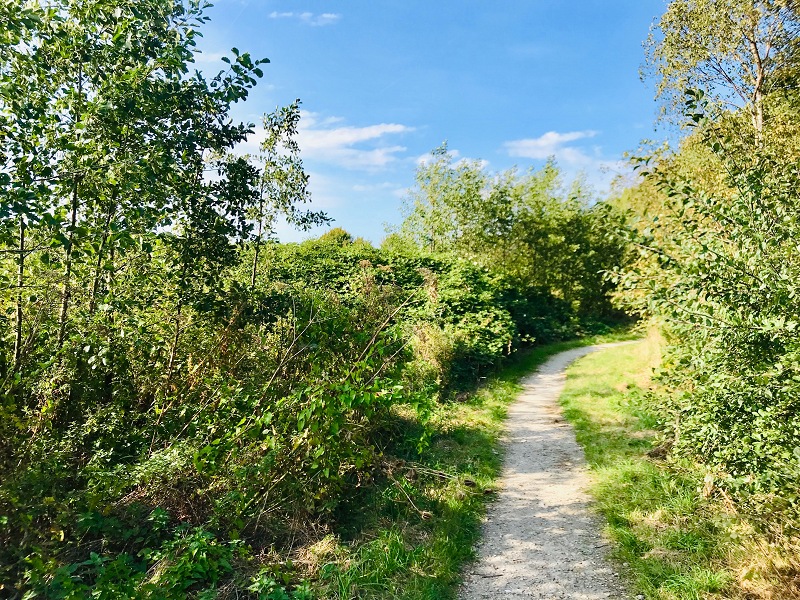
A 12K trail run including hills, grass, gravel and such.
Broekpolder in Vlaardingen
Afterwards
I was tired from the weekend. I took the motorcycle for a spin with a friend and we slept in tents, which I like a lot, but the sleeping isn’t the best. The run went okay, but I was tired. No problem, though, as an hour running through a small forest and taking on some small hills is actually quite enjoyable.
Workout data
If you want to see the workout, check it out on Garmin or on Strava.
Today’s the day for a nice long run. Except, it isn’t. The long run was programmed for Saturday in my training program, but I so happen to go away for a few days, so moved it to Friday. No big deal.
The workout
A steady run of 24km in heart rate zone 2, pace around 5:00/8:00.
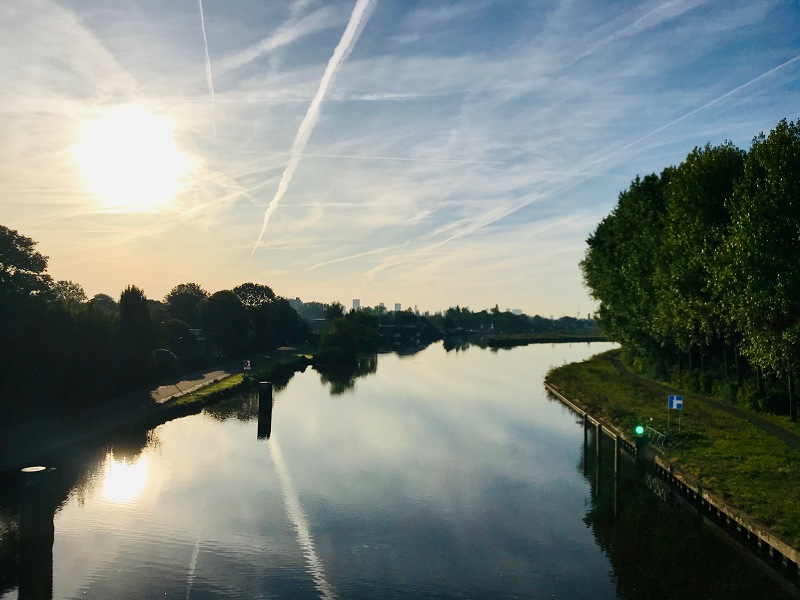
View from the Doenbrug near the airport in Rotterdam
Afterwards
I felt my knee a bit, don’t know where that came from. Apart from that, the run was nice, sunny and it was easy to keep a low heart rate at a steady pace. A planned a nice route around the airport of Rotterdam, which sounds less attractive than it actually was. As I went running early, the views were beautiful and there was lots of greeting and saying hi to cyclists and the occasional other runner.
Workout data
If you want to see the workout, check it out on Garmin or on Strava.
A good warming-up wist a lot of exercises involving a speed ladder. The core of the training consists of the following intervals: 3x200m, 3x400m,3x600m at a pace around 3:20/5:22. Between each repetition, a recovery of 30, 45 and 60 seconds respectively and two minutes between each set.
Photo by Andrew McElroy on Unsplash
Afterwards
This was a hard workout, but also very rewarding. Setting a pace in the beginning is tough, because it sets the pace not only for the 200m, but also for the 400m and 600m intervals. However, it went well and I was able to keep the pace steady, although, as often is the case, I started out too fast.
Workout data
If you want to see the workout, check it out on Garmin (you can see it without an account) or on Strava (you need an account).
After yesterday’s tempo workout, today’s planning includes a long run.
The workout
A steady run of 15km in heart rate zone 2, pace around 5:00/8:00.
Afterwards
I felt tired, and a bit rushed, because I was planning on swimming in the evening and I was running late. Unfortunately, I didn’t really enjoy the run, but pace was steady, my heart rate pretty low and, well, sometimes mileage is just mileage.
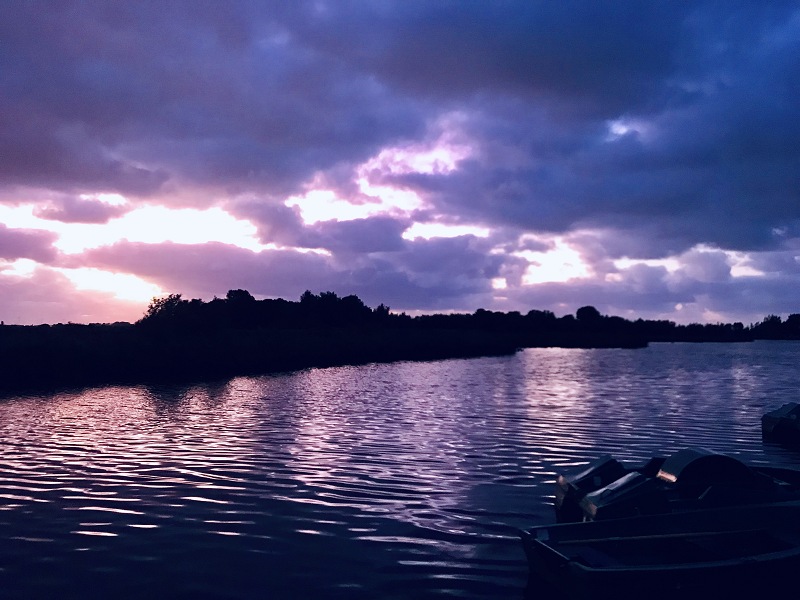
A nice view on the Vliet at sundown
In the evening I swam 2km to try out a wetsuit I had borrowed from my wife’s colleague. The swimming was really, really nice, as my first open water swimming experience was without a wetsuit and it was way too cold. Doing a run while somewhat tired and going for a long(er) swim was too much for a working day, but I did feel refreshed and less tired after the swim.
Workout data
If you want to see the workout, check it on Garmin (you can see it without an account) or on Strava (you need an account). You can see the swimming route here on Garmin and Strava.