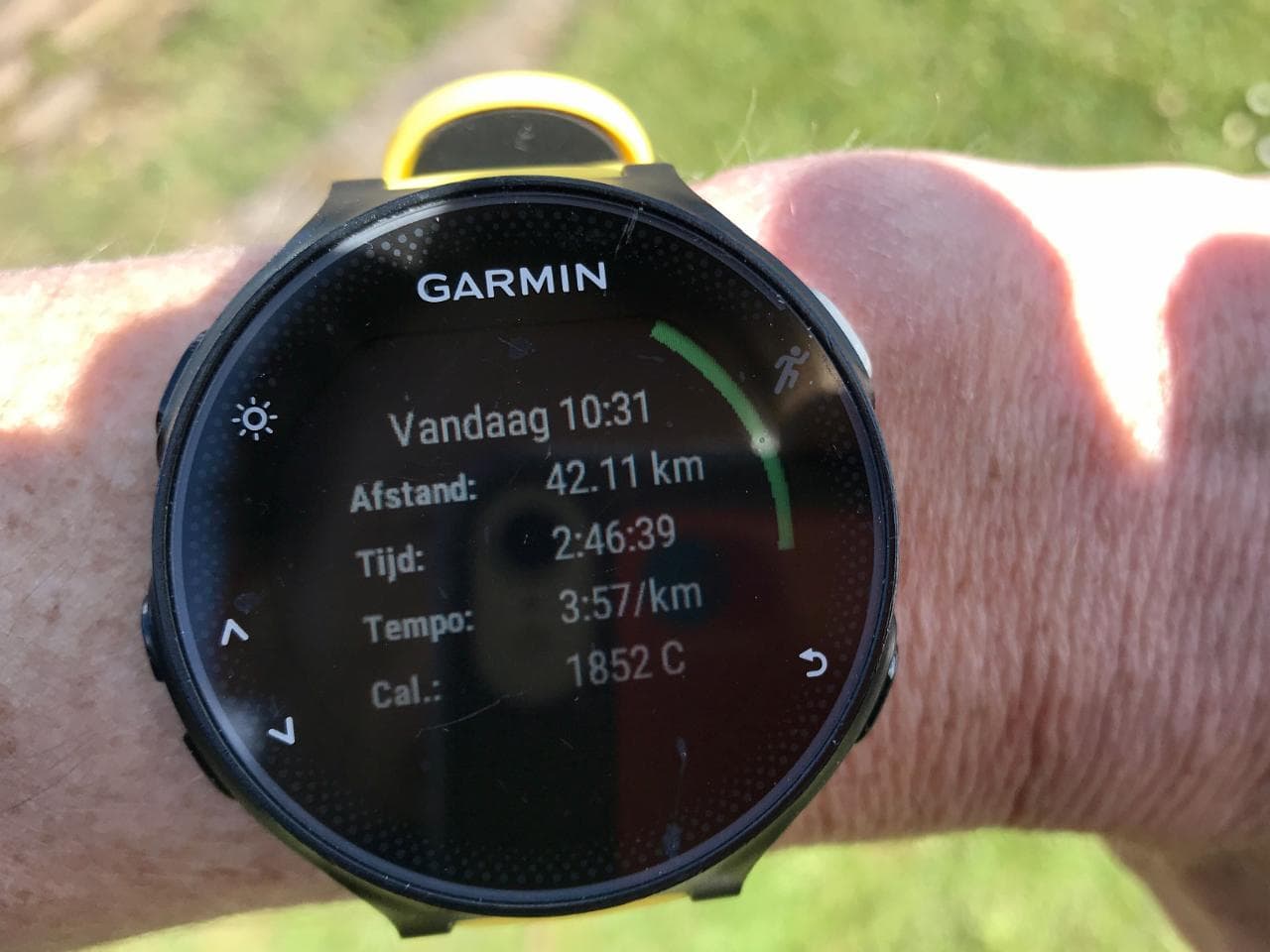
On Sunday April 11th, 2021, I ran a marathon, which was organised locally as an alternative for the (again) postponed Rotterdam Marathon. I didn’t really decide to register until a week before, but I’m really glad I finally did, because I finished in 2:46:37!
Official time by MyLaps: 2:46:37!
Coming from a PB of 2:58 in 2018, that’s much more than I dared hoping for. Those are not just words, which I will explain below.
The taper was less than perfect, of course, because of the late decision and the large number of unofficial races I ran prior. However, there were some races I ran as test for my envisioned marathon pace, which probably helped a lot — not in the least mentally. So, although I tapered for only one week instead of the usual two to three weeks, I did improve my carb loading by calculating my needs, cooking and preparing everyhting four days prior to the marathon, and rigourously carb loading and sticking to the plan for the next three days. (I’ll post the calculations sometime later. For registration, I used MyFitnessPal.) I feel it really worked, because I did not experience any depletion during the marathon, which was a first.
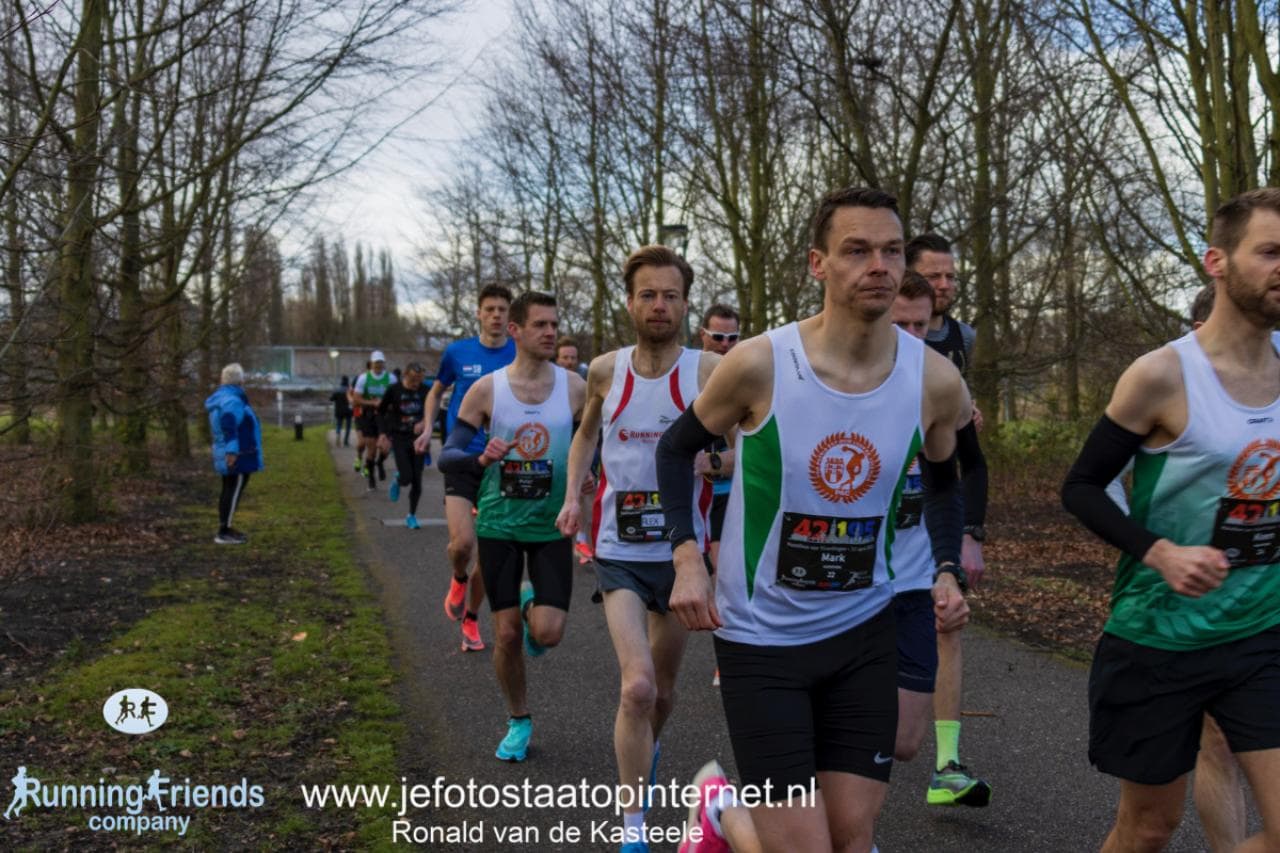
Start at 10:30 AM.
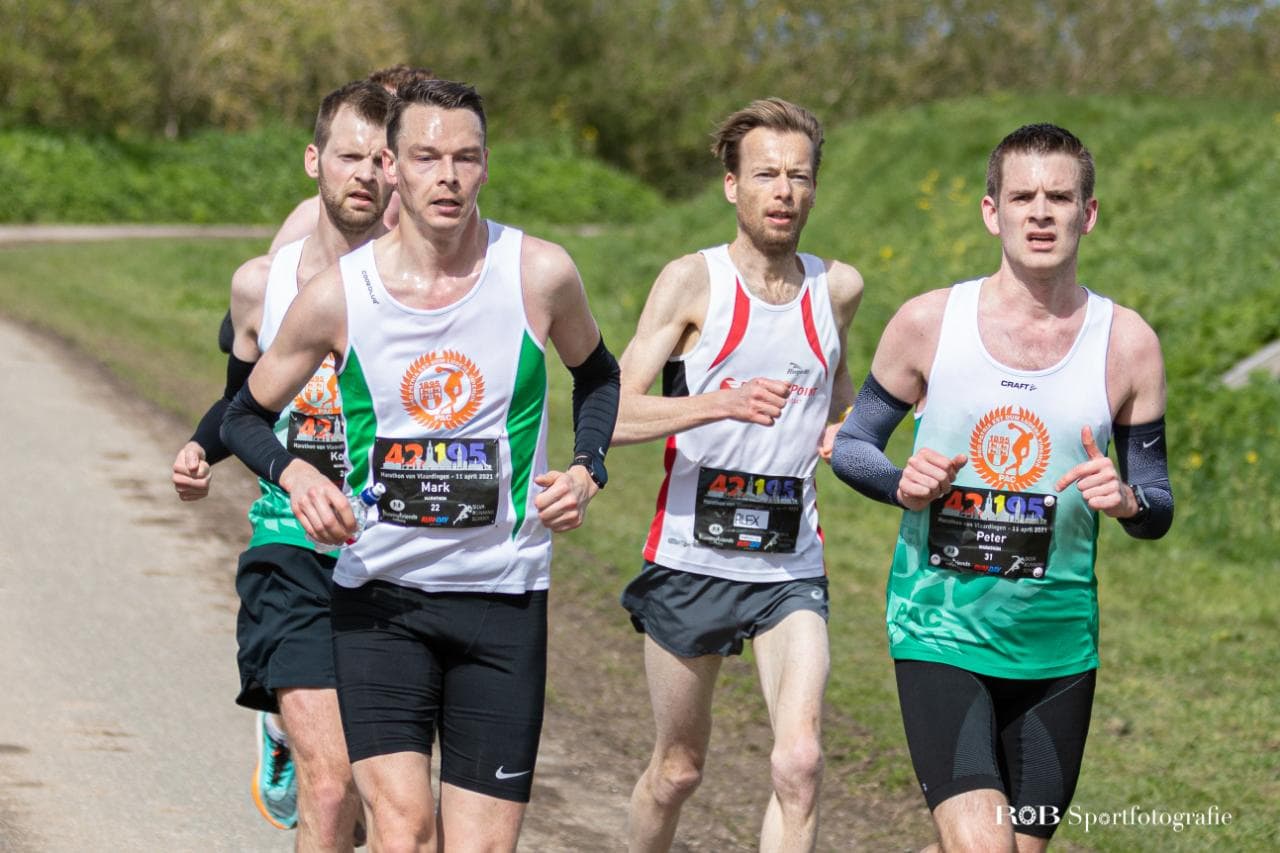
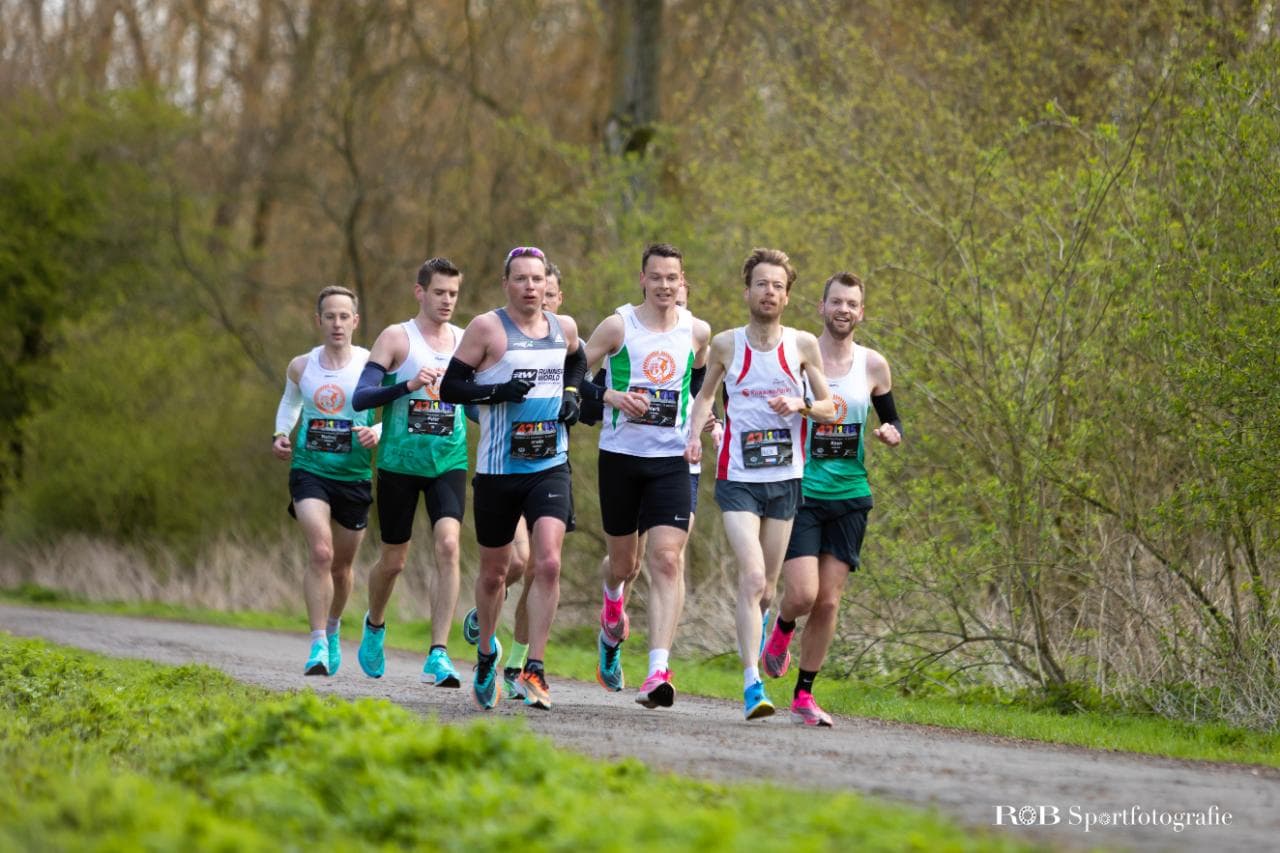
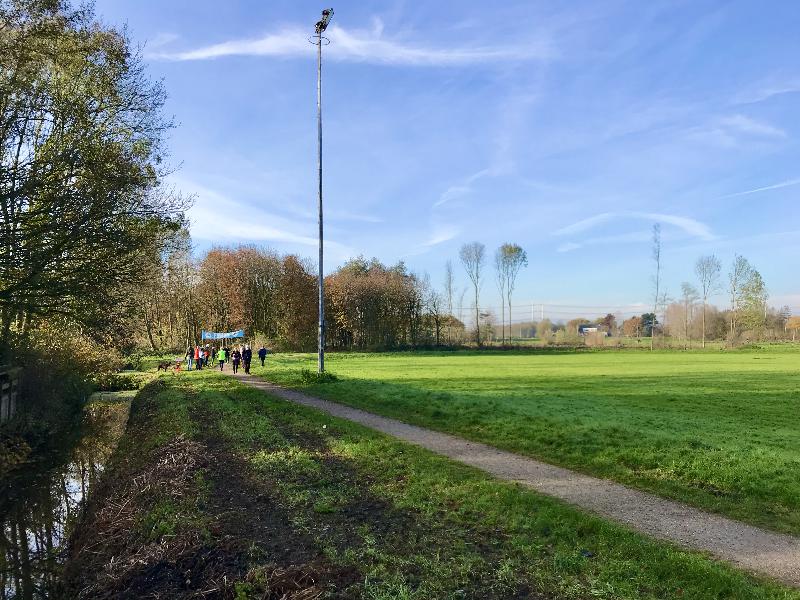
The weather conditions were okay-ish, because forecasts included snow, but they were clearly wrong. There was heavy wind, though, and given that the course was in a quite windy park, it made the course quite tough. However, as I was deciding on whether or not to compete, I heard a group of runners from another track club would start at 4:00 p/km pace, which would set a finish time of 2:48. That was my plan A. Plan B was to start at 4:05, and plan C was to start at 4:10. As I noticed the wind cycling to the course, I decided to go with the group, to keep each other out of the wind. Running slightly too fast would be preferrable to running somewhat slower, but alone. I did not regret this. I felt good and we started fast, around 3:53 p/km. We quickly got to a very constant pace just below 4:00 p/km (3:57, 3:58), and it felt right. Around half of the group fell behind during the second half, but in the end, we were a group of four and keeping each other out of the head winds for stretches of 2K, and later 1K, worked very well, and everyone did their best to help each other. What a great feeling to work together! Add to that the fact that my coach, Carla Ophorst, and team members from RA were there to support and provide advice, and you have all the ingredients for a great race!
The race was very windy, but apart from that, the weather was okay.
Of course, running a marathon never really feels easy, but it were only the last two K’s that really felt hard, perhaps because the group sped up a bit so close to the finish. I could exactly tell where it began to hurt: my upper legs started to feel really tired and to strain. What I learn from that, is that I can probably benefit from more squats and quad muscle exercises. That’s great, because it is totally trainable. Back to the race: I increased my own pace to around 3:45 p/km, but the other guys went off a bit faster. In the end, I finished in 2:46:37, and they finished 7 seconds faster, so no real lag there.
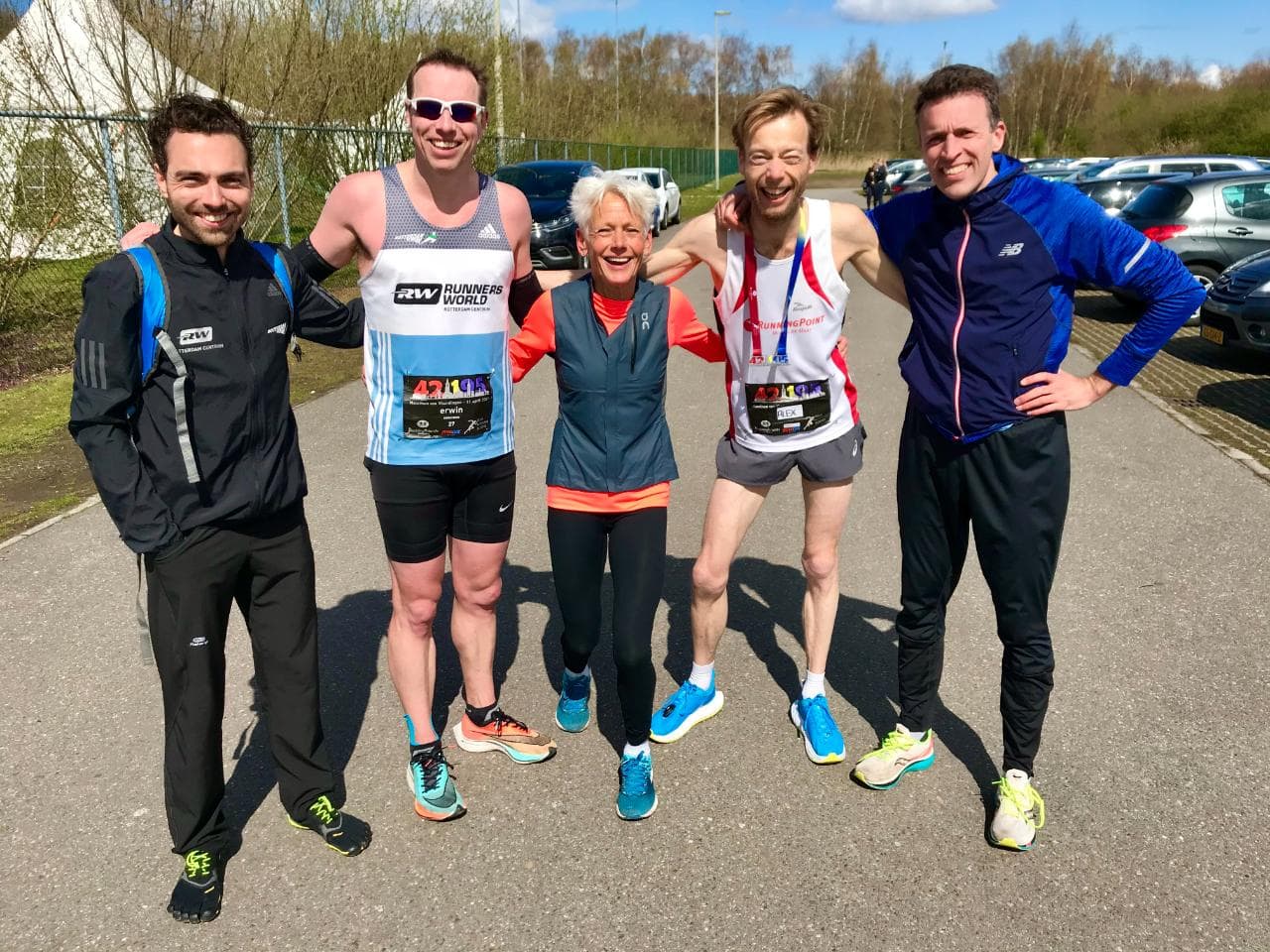
We worked together as group, keeping a very steady pace and keeping each other out of the wind.
I secretly hoped to finish around 2:50, which was already a stretch, so you can imagine how incredibly happy I was when I finished in 2:46. You can also imagine a new goal immediatly popped up… I’m going to aim to run a sub-2:45 in Rotterdam in the fall, if it’s not postponed again. Yes, <2:45 is being ambitious, but given my current time, I think it is a realistic goal.
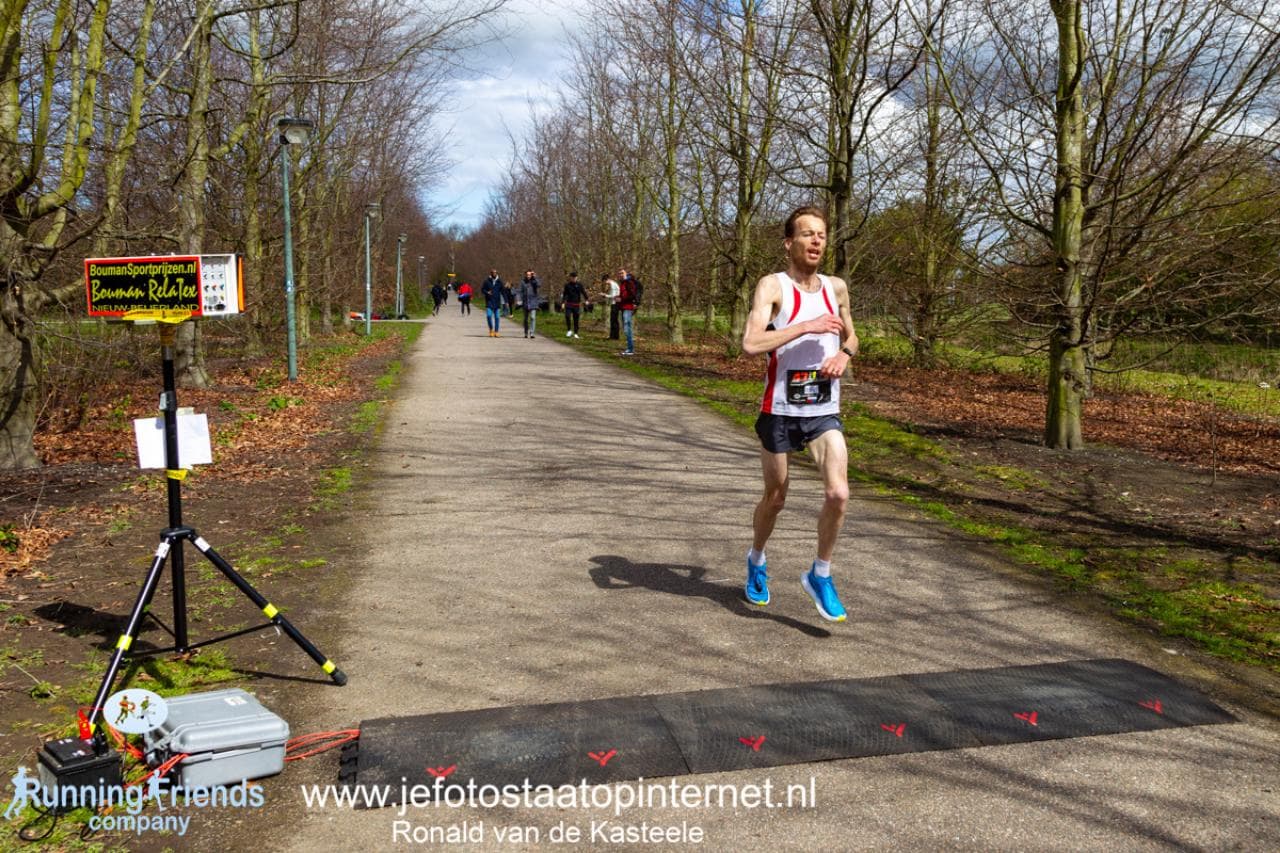
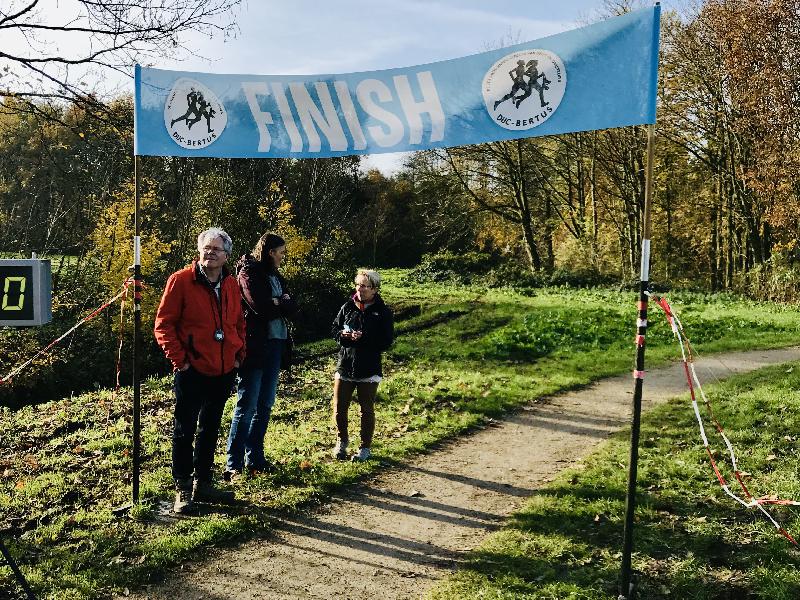
Finish!
My coach and members of the team were there to provide support, which I greatly appreciate and which really helps mentally.
Great support for all RA runners!
For now, I’m sticking to a recovery plan of four weeks, and I did not run for two days after the marathon. On Wednesday I did a short run, which felt okay. No pains except muscle aches in the upper legs, and some chafing from the Hoka’s. If that’s all, you won’t hear me complain!
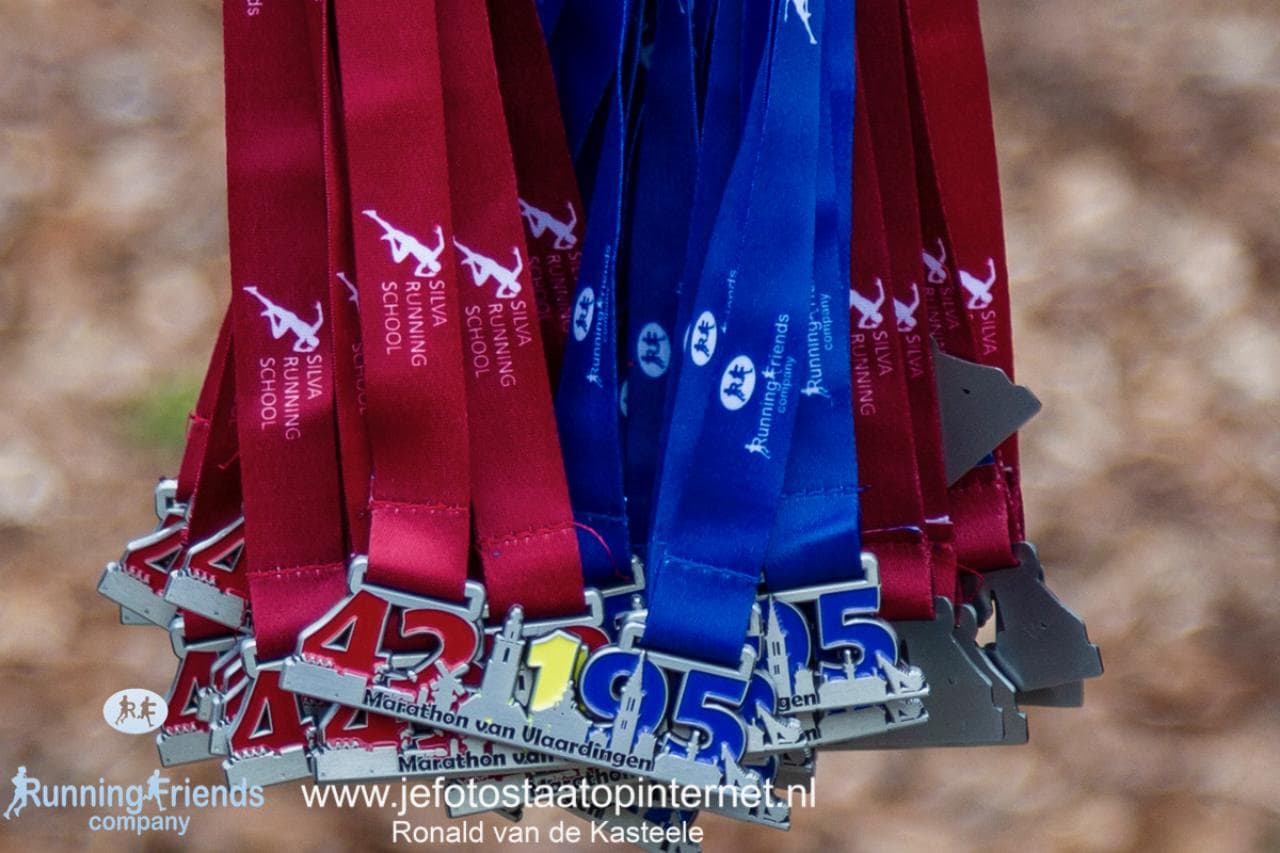
The medal (although I’m not really a medal enthusiast, I do value this one very much)
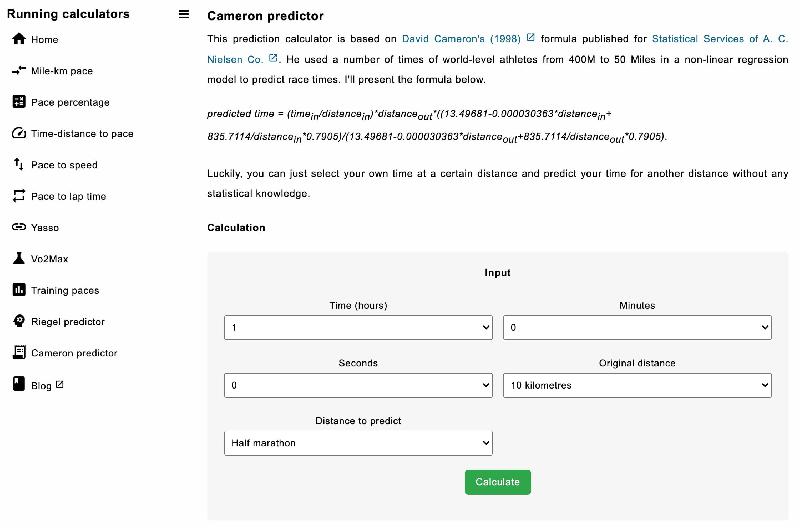
I have added a calculator that uses David Cameron’s (1998) formula published for Statistical Services of A. C. Nielsen Co.
Cameron prediction calculator
Cameron used a number of times of world-level athletes from 400M to 50 Miles in a non-linear regression model to predict race times. I’ll present the formula below.
predicted time = (timein/distancein)distanceout((13.49681-0.000030363distancein+ 835.7114/distancein0.7905)/(13.49681-0.000030363distanceout+835.7114/distanceout0.7905)
Here, timein is the known time from a known distance in seconds, distancein is the distance in meters you put in. Distanceout is the distance in meters you want to predict the time of (predicted time, or timeout).
On the calculator page, you can just select your own time at a certain distance and predict your time for another distance without any statistical knowledge.
I have updated and redesigned the calculator page. It’s faster and more responsive than the previous version, and, lucky me, easier to maintain.
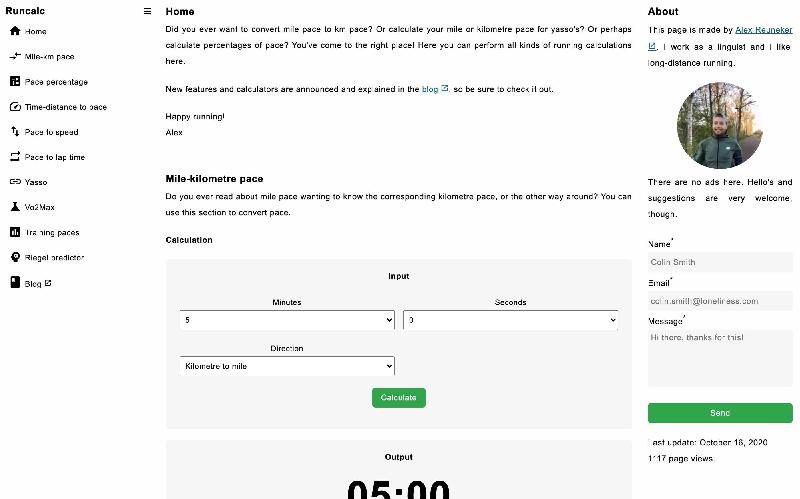
Screenshot of the new calculator interface
I have added some new calculators as well, such as a simple pace to lap time calculator. The reason for this is that with the pandemic, I have run more track races than before and its pretty handy to know lap times instead of paces in such occasions.
Last Sunday I ran a distance beyond the marathon for the first time, one of the reasons being the frustration of having almost completed a tough training plan just when the marathon of Rotterdam got cancelled. Given the pandemic, I do understand and fully support this decision, of course, but it still sucks.
Trying an ultra-distance
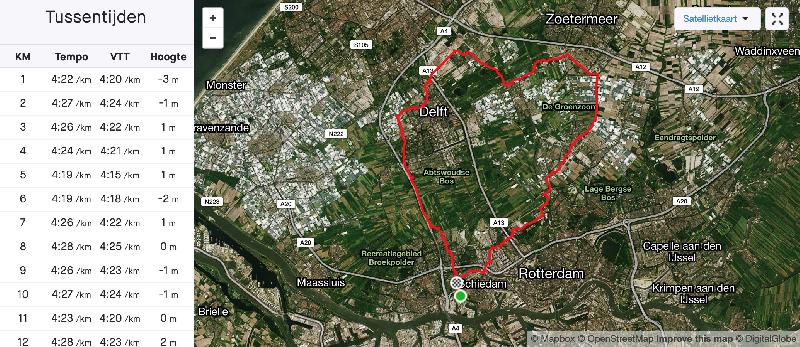
I didn’t feel like racing on my own, because I do like having other runners around to group up with, keep each other out of wind et cetera, so I decided to try an ultra distance — a 50K, at long run pace, so around 4:30 per kilometer. Below you’ll see the route.
It was a weird experience, running beyond 42K and especially doing it without other runners or people along the sides of the roads. Luckily, my wife was crazy enough to accompany me on her bike and provide me with support, drinks and, near the end, some small foods.
How it felt
The only thing I regret is wearing Hoka Clifton’s. Of course, they are made for long runs, but the toebox is so narrow that 35K may still be okay (I’ve worn them for most of my long runs), but not for more than that. I already felt chafing at 10K and I had two major blisters afterwards, while I actually never really have any blister issues.
During the run, there were the usual emotions: first 20K were fun, from 20 to 30K I felt okay, from 30 to 35K I was fed up with it, and from 35K onwards it was okay again, apart from the wind that got stronger and stronger. Hitting 42K I felt good until 47K and at that time, I just didn’t want to run anymore. Of course, I kept on going, keeping cadence high and pace steady, but it felt like it cost a lot of energy. Which it probably did. Hitting 50K was a milestone, of course, and doing a 2K cooling-down felt okay, so mission accomplished.
Conclusion
Would I do it again? Well, a 50K I’d do again, but only in an organised race, I think. And wearing different shoes, of course.
It’s been a while since I posted anything here. A lot has happened running-wise, most importantly of course cancellations, like the cancellation of the Rotterdam Marathon, due to the corona virus.
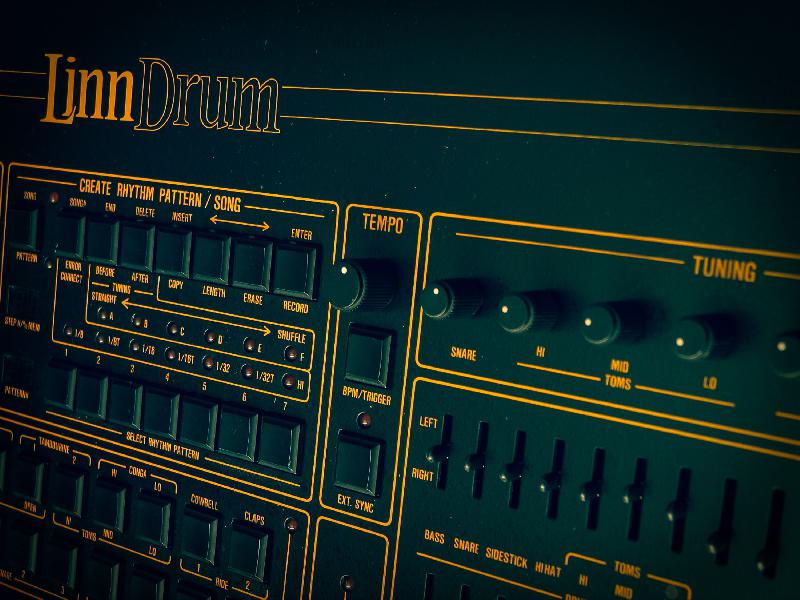
I’d like to focus here on something else however. I’ve created a simple page with downloadable metronome MP3 files, ranging from 170 to 200 BPM. Each MP3 is an hour long and can be looped in your favourite player.
Photo by Steve Harvey on Unsplash
Although everyone can generate metronomes using Audacity, I thought it would be handy for others to be able to just download lengthy metronome MP3’s. They’re great to use when working on your cadence and technique.
Today, I ran the final race of the training schedule I made. It was a local 10K and turned out to be a lot of fun.
Part of race was on an off-road path
The race
I ran a 10K race in Delft, the Bertusloop, organized by DIJC Bertus, which is small and local, but does attract a healthy amount of runners from Delft, Rotterdam and places around that area.
This race was on my schedule as the final race, with the last race, two weeks ago, as a tune-up that, if it went well, would be the end of the training program. However, as my footpod was apparently keeping track of distance instead of my GPS, I ran a good race, but paced based on the wrong information. So the 3:29 per km was in fact around 3:37. So, my watch registered a race that was too long, the course was too long, and in the end, I just don’t know how I did. So, this was kind of a chance to try again.
I started the first K too fast, at 3:23, but quickly got back to 3:30. That was my goal pace, and I knew it would be hard. It was hard and I couldn’t keep it up, so I ‘dropped’ to splits around 3:36. Not what I was hoping for, but still, I managed to run my own race, which was really important here, because there was one runner in front of me, who kind of collapsed after 5K. I knew the first part of the race that I shouldn’t keep his pace, because it just felt too fast for a 10K for me, so, in hindsight, I’m really glad I kept my own pace. At 5.5K, I overtook him without speeding up and I was able to finish the race first by more than a minute.
So, what’s my finish time, you ask? Well, 36:03. Four lousy second short of sub-36, which was my goal. I ran behind the cyclist who navigated and he blocked my view on the official time. My watch was set up to show lap time, distance, pace and cadence, so when I saw 35:50 on the clock, I knew it was probably too late for a final end sprint to catch up. I did sprint, but to no avail. So, that really sucks. Besides that, I am pleased with my time, as last year, I set my PB at 36:26, and I shaved more than 20 seconds off. I’m really pleased with that, although, of course, I was hoping for more.
The race was a lot of fun — local and well organized
Conclusions
The weather was great, so nothing to complain about in that department. I do think not having two sharp turn-arounds, which I really suck at, and some really slippery, uneven paths would have gotten me a sub-36 10K, but still, that’s all part of the course and something I can’t control. What can I do better next time?
Post-race coffee
First, I think I should not be working in the garden and definitely shouldn’t be carrying very heavy window frames on our small steps into the basement the day before a race. What was I thinking? I felt it directly the first kilometer. On the other hand, I have only the weekends to do that kind of stuff and I can’t sit around doing nothing the whole weekend of a race.
Second, I think I’ll just have to admit that pacing a 10K at 3:30 is too ambitious right now. Next season, I’ll try again.
Third, doing hard strides the day before — I don’t know. I see it in a lot of training plans, but maybe I should experiment doing them two days before a race and doing no running at all the day before.
Race data and results
If you want to see the race, check it out on Garmin or on Strava. The official results can be found on the DIJC Bertus website.
Today, a short workout with strides as preparation for a race tomorrow.
The workout
Five strides, or, in other terms, five times 100m at maximum speed, a good, dynamic warming-up, 2K easy, then the strides with 100m recovery in between, and finally 2K easy to cool off. The idea is to get the legs working and get in some speed, without tiring too much.
Afterwards
The 100 meters again felt very short, but it’s just to get the legs working and the heart rate up. Pace for strides was around 2:50/4:34 per km/m.
Photo by chuttersnap on Unsplash
Tomorrow I’m doing a 10K in Delft. It’s not a big race, but the course is said to be fast, and, also important, people tell me it’s a fun, local race. Wish me luck!
Workout data
If you want to see the workout, check it out on Garmin or on Strava.
An easy run at 5:00/8:03, heart rate zone 2, 10K total.
Afterwards
This was not a very good run. Sometimes you just don’t get into it, without being able to pinpoint what it is. I didn’t feel particularly tired, didn’t have aches, but I just felt off today. We’ll just see what another day brings.
Workout data
If you want to see the workout, check it out on Garmin or on Strava.
8 times 400m at 3:15-3:20/5:14-5:22, with 90 seconds recovery in between. 3K for warming-up and around 2K cooling-down.
Photo by Veri Ivanova on Unsplash
Afterwards
Wow, shorter distances at high speeds are always tough, as was this one. Pacing was, ehm, okay… all intervals at or just below 3:10, while the plan was 3:15-3:20. I should keep an eye on that. Next to that, it went well, although in the last two intervals I felt something in my left knee. Not a problem, but I’ll have to keep an eye on it.
Workout data
If you want to see the workout, check it out on Garmin or on Strava.